
Bear ravages Spokane apiary, killing thousands of bees, destroying hives and gorging on honey to the tune of $25,000
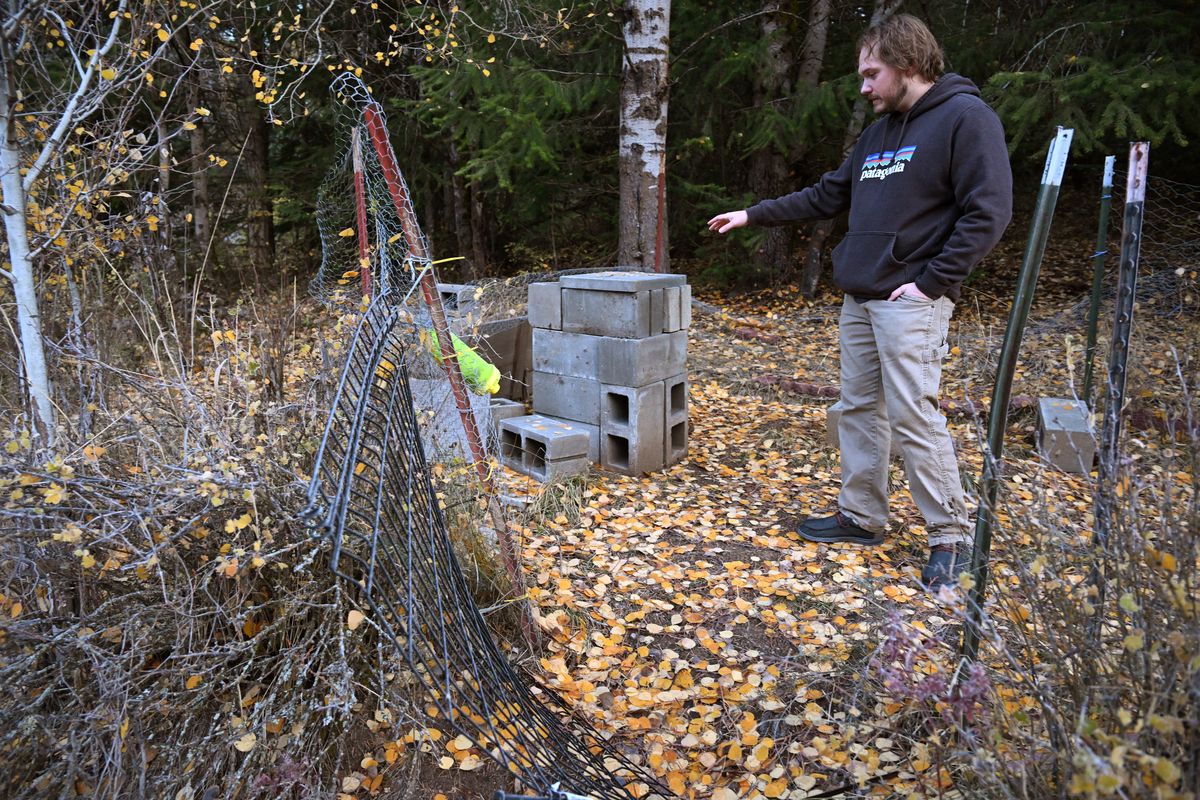
Nestled snuggly behind a patch of pines on Mount Spokane sat a wire fence, protecting an array of 11 honeybee hives from foraging raccoons and curious dogs.
It was never meant to keep bears out – and it did not, as beekeeper Matthew Pennell, 27, found out the hard way.
When he made one of his weekly trips to check on them, he found all but one hive box completely smashed, frames filled with wax, honey and baby bees scattered throughout a field. Piles of dead bees lay around the scene, fuzzy exoskeletons numbering in the thousands.
The bear destroyed two years of beekeeping progress put in by Pennell and the hives’ co-owners, Josh Silva and Colin Axtell. With the apiary located on Pennell’s cousin’s property, they had never had to worry about bears thanks to the cousin’s three big dogs. That week of the attack though, the dogs were in a kennel as their owner traveled for work. Pennell had not thought about the bears taking advantage of their absence.
With Axtell, 27, at the time, Pennell called Silva, 36, who was across the state for law enforcement academy training.
“I was in class at the time, and it just felt like a gut punch,” Silva said. “It was horrific.”
With a single remaining hive still viable, Pennell and Axtell began readying to move it to Pennell’s back yard in Spokane Valley for safe keeping.
“And then, with minimal cell phone service – you kind of walk through one spot and you might get a text or two, and I saw my wife texted me, and she was going into labor,” Pennell said. “So I said, ‘OK well, we’ve gotta go.’ ”
Plans shifted immediately.
He rushed to the hospital, emotion overwhelming him. “Everything” was going through his head.
“Everything from feeling like a failure to the bees – not going to lie, I cried pretty hard,” Pennell said. “But also happiness in the sense of – my wife always talks about oh, it’s a new chapter, a new chapter to a book. And it kind of did feel like a new chapter, where it’s like, well yes, we experienced this great loss, but with it comes a great new addition.”
Pennell’s wife Margaux Albright gave him a big hug when he got to the hospital, saying she felt his pain.
“And I was like, ‘I don’t think its as much pain as you’re in right now,’ ” Pennell said. “And she was like, ‘well, actually, I’m not in any pain at the moment.’ I said ‘OK, well, I’ll take the pain for now then.’ ”
Albright gave birth to a healthy baby girl that same day, named Maven to keep a tradition of “M” names in the family. Pennell is already thinking about the day he will get to tell Maven the story of the day she was born.
“She’ll be like, ‘Dad, how’d you get into beekeeping and why do you have so many hives now?’ ” he said. “Well, let me tell you about one day – it was a very important day. Changed my life.”
When he came back to the scene of the honey raid two days later, though, he was greeted by another pile of dead bees and the remaining hive box drug out through the field like the ones before it, even though they had tried to protect it.
Pennell managed to save one queen bee and some surviving workers he found, now kept safely at his Spokane Valley home. He, Silva and Axtell lost an estimated $15,000 to $25,000 in honey, bees and boxes total. The hives held around 700 pounds of honey.
While he hopes to eventually make money from beekeeping, Pennell is currently a full-time account manager for a software company who does beekeeping on the side. Silva is a county jail correctional officer and Axtell is training to be a surgical technician. The group – officially called Lilac City Honey – has an LLC set up, but Pennell said that it is largely for the case that they need to sell honey to fund more supplies for the bees.
“But most of us enjoyed it because it was a connection to nature. It’s something different that you don’t see every day. We’re out here in the woods, it’s a beautiful spot,” Pennell said. “With the bees on the decline too, just doing our part to help save them.”
Last winter, more than 60% of commercial honey bee colonies in the United States died. It was the largest recorded loss in American history, spurred by disease and mite infestations.
Pennell’s apiary was an exception to that loss, seeing an impressive 75% survival rate. In Spokane, Pennell said that most beekeepers see winter colony survival of around 50%.
His work in the software industry is just a means to fund the passion for Pennell. His enthusiasm rubbed off on Silva, who said that while he is training in law enforcement currently, his dream is now to become a professional pollinator, owning as many hives as he can and driving them to areas in need of pollination. He said that he wants to eventually become one of the Pacific Northwest’s largest pollinator groups.
“I have a vision where I would love to see less lawns in people’s yards and more flowers,” Silva said. “I just think that that makes your location, wherever it’s at, a little bit more beautiful, a little bit more green and a little bit more welcoming. And bees – they play a very heavy role in doing that.”
Pennell shares an end goal with Silva – to rebuild and accumulate somewhere between 15 to 30 hives that they can use as mobile pollinators. He also envisions Maven coming up to help with the bees when she is old enough.
“I can’t wait to put her in a little bee suit and have her out here,” he said. “Once she’s old enough and can understand what’s happening, we’ll take her out here and get her introduced to bees and hopefully raise another generation of beekeeper.”
It should take Lilac City Honey around two or three years to make it back to where they were, Pennell said. His cousin set up a GoFundMe to help replace lost equipment and bees.
Even if the GoFundMe does not yield a penny, Silva said that he and his co-keepers will double down on getting their hives back, even if it means “reaching into our own pockets.”
Time will be the biggest factor in recovery, though.
“Sometimes, as much as you want to intervene as a man,” Pennell said, “nature’s got it’s own path in front of it.”