
Stage Left Theater reimagines Shakespeare in gender-bending ‘Julius Caesar’
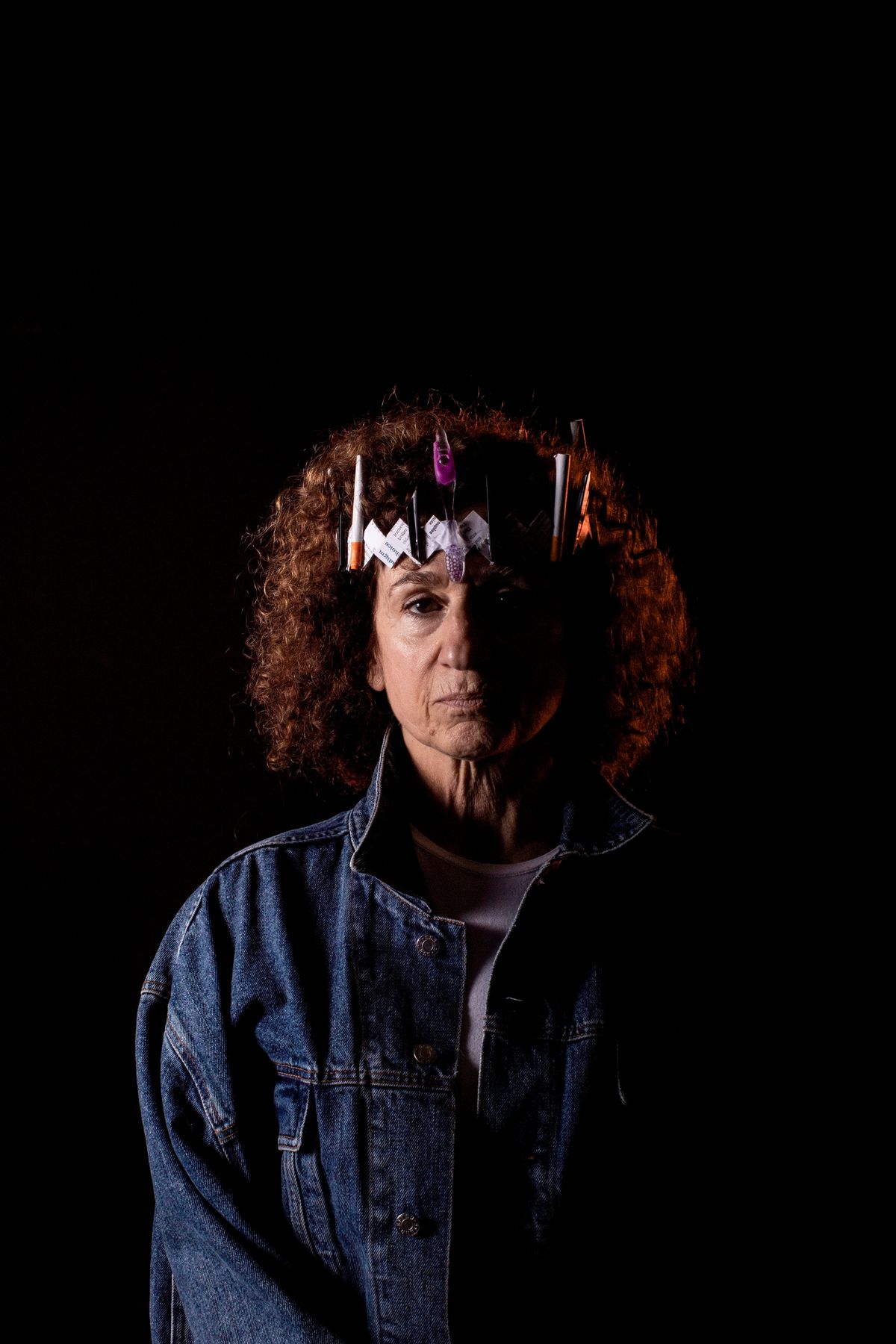
Two years ago, Jeremy Whittington, then-artistic director of Stage Left Theater, reached out to actor/director Chelsea DuVall and asked if she’d be interested in producing one of William Shakespeare’s plays at the theater.
DuVall, who has worked with Shakespeare’s plays on both academic and professional levels, said yes and that she knew exactly what she wanted to do: A production of “Julius Caesar” featuring an all-female/trans-inclusive cast.
DuVall has always been interested in the representation of gender in Shakespeare’s work, noting that even if a character is designated as one gender, they inherently have “all the colors of gender within them as they’re written.”
” ‘Julius Caesar’ also is a male-heavy show,” she said. “Historically, there’s two, maybe three female characters so I’m like ‘Let’s put this in the female and trans scope and see what other colors of the story come about,’ because we’re naturally going to bring different things, subjectively, based on our own experience, identity and that sort of thing.”
The story begins with the celebration of Julius Caesar (Deborah Marlowe), who has just returned from war. Caesar holds a victory parade, during which a soothsayer (Amanda Hampton, who also plays Lepidus and is in the ensemble) advises her to “Beware the ides of March,” advice she decides to ignore.
Meanwhile, Cassius (Bridget Pretz), a senator, fears Caesar is becoming too powerful, almost like a dictator, and talks to Brutus (Dana Sammond), another senator, about killing Caesar. Brutus hesitates to join the plan, though she does admit that Caesar appears to be abusing her power.
Just before the ides of March, the group of conspiring senators meet and share they have forged letters from citizens of Rome urging Brutus to join the group looking to take down Caesar. Though still reluctant, Brutus eventually agrees, seeing the killing as a way to prevent anything from happening to the citizens if Caesar were to become the ruler.
As Caesar arrives at the Senate, the group kills her, with Brutus making the final blow. Though the citizens are initially supportive of the killers, they turn against them after Marc Antony (Skyler Moeder) makes a speech and reads the people of Rome Caesar’s will.
The play also stars Cecelia Sutton, Katelyn Rush, Emma Woodward, Tamara Schupman, Sarah Plumb, Lacey Olson, Erin Sellers and Micah Sybouts.
“Julius Caesar” opens Friday and runs through Sept. 28 at Stage Left Theater. The show is stage managed by Elizabeth Lewis and assistant stage managed by Faith Brodwater.
In addition to the vision of a female/nonbinary/trans-inclusive cast, DuVall also wanted to set her production not in Rome but in an internment facility in a world that has fallen to fascism. Any voices deemed problematic or contrary and those who have committed crimes are sent to these facilities.
When you put a group of people together, a hierarchy naturally arises, DuVall said. There’s also instances from throughout history, including World War II and other instances of facism, where “women deemed subversive or controversial, as well as queer and trans voices, have been the first populations to be interned.”
“Where it came from was I was like ‘Well, historically, we’ve actually already done this.’ But now it’s an indefinite internment, because the country has fallen over,” DuVall said. “When you have populations trying to survive, hierarchy arises, right? Keep people fed to keep people going to make sure that people have things going on, but if they’ve already experienced tyranny and fascism, then their fear for it is going to be that much more present. And humans turn on each other.”
DuVall said she although the play was selected two years ago, its relevance with the current administration feels “painfully present.”
DuVall’s production required a bit of adapting from the original text. The biggest change was adjusting pronouns, though some words, like “mankind,” were kept because “womankind” would have added an extra syllable to the line.
The new setting also required DuVall’s production to have a new look. Costume designer Neva White has created uniforms akin to ones those in long-term internment would receive upon entering the facility. Because the characters are interred for the long haul, they’ve had time to personalize their uniforms.
For the set, designed by James Landensiedel, DuVall expressed interest in the prison industrial complex but also in dilapidated and forgotten spaces.
No matter the setting or the identity of the performers on stage, DuVall wants her actors to understand that these characters are “complete, complex and nuanced humans.”
“If you’re really fearful of a leader, if you’re really fearful of power that is growing, and you make a decision around that to guard what you feel is at danger or is vulnerable, is that black? Is that white?” she said. “I think it’s a lot about nuance.”
She also wants to remove some of the judgment that’s often placed on the characters because of the choices they’ve made. DuVall wants Marlowe’s portrayal of Caesar to be right on the brink. Is she dangerous? Is she not? Is she acting out of self-interest? And what, in this world, is self-interest?
Along the same line, DuVall hopes Pretz’s Cassius is seen as a real human and not a villain.
“A lot of representations in Shakespeare still play on archetypes that are not nuanced enough for people to always relate to,” DuVall said. “It was really important for me, those central characters, Brutus, including, are real people, nuanced. It’s on the tip of things could go one way or the other.”
DuVall plans to see opening and closing night and is excited to see how her cast grows within their roles but also grows the work as a whole. She believes this production, because of those on stage, is a redefining of a tale that’s been told time and time again.
“Women and trans and queer voices, there’s not as many roles for us,” she said. “There’s getting to be more and more, but in the lexicon of dramatic literature, it’s still primarily cisgender male driven, so I think it’s important to redefine some of these stories with voices that speak to our current moment.”