Junior hockey managers charting unknown waters as college-age players pursue previously unavailable options
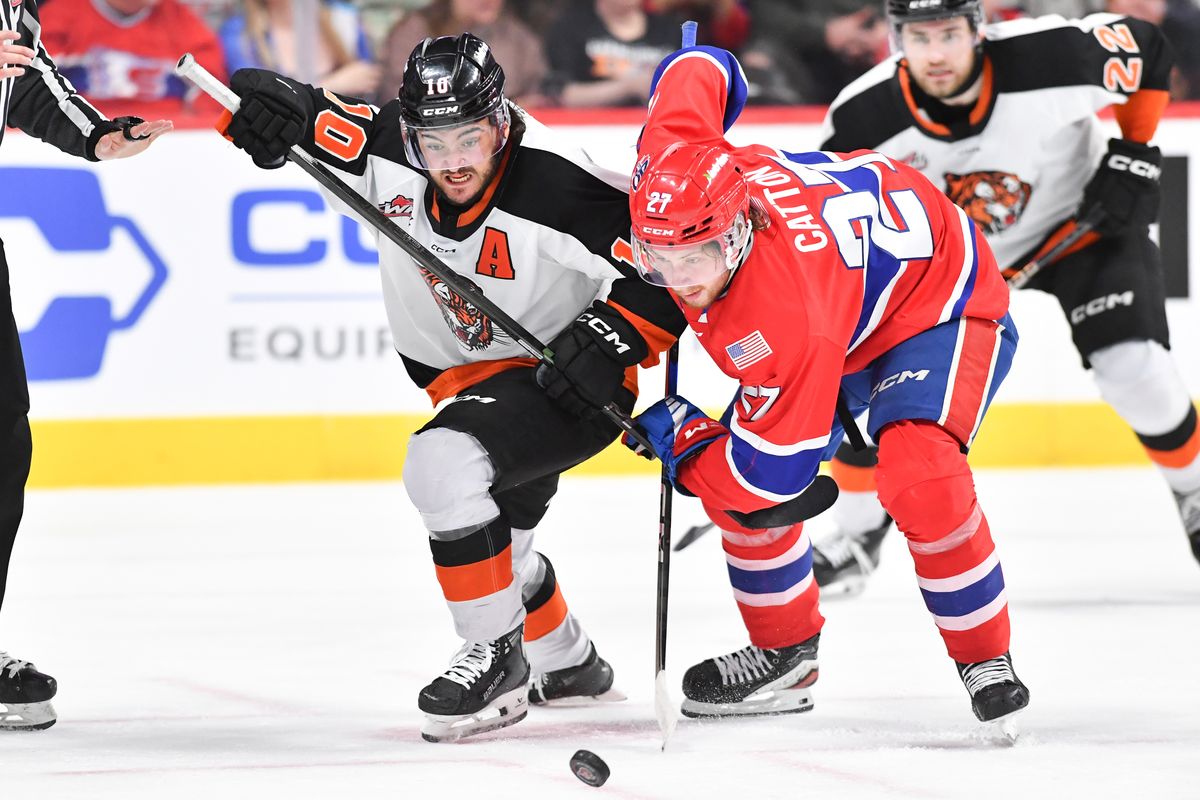
General managers of Western Hockey League teams are planners by nature. With a limited amount of time for players to develop on their rosters before they reach draft eligibility or age out, GMs typically have their rosters sketched out several years into the future, with new draft classes sliding into roles older players once handled.
But with drastic changes in eligibility rules in place for the 2025-26 season, managers across the league are charting unknown waters as college-aged players now pursue opportunities never before available to major junior players.
“You’re just not sure who’s coming back,” Spokane Chiefs general manager Matt Bardsley said during practice at Eagles Ice Arena on Wednesday. “Before you could kind of project your teams, even three years out. Now, it’s a little bit different. You certainly have to be mindful of the current team. But, you know, it doesn’t change our drafting philosophy. We still have to make sure that we have players that are going to be able to play, contribute, excel at the younger ages – probably even more.”
The unease is thanks to a recent bombshell change that has rocked the junior hockey landscape: Beginning on Aug. 1, major junior players became eligible to play in the NCAA, leading to an unprecedented exodus as rosters across the Canadian Hockey League were raided and hundreds of players relocated to United States colleges.
The change hit close to home. Dawson Cowan, the Chiefs workhorse goalie who led them to the Western Hockey League championship series in May, decided to forgo his remaining junior eligibility and committed to the University of Nebraska-Omaha for the 2025-26 season.
The Chiefs used one of their import picks to select 2006-born goalie Linus Viellard to share time with returning 2008-born Carter Esler, who played for Team Canada at the Hlinka-Gretzky Cup in Brno, Czechia in August.
“It’s important if you lose some players a little bit earlier than unexpected, that you’ve got some players coming up that are going to be ready to play,” Bardsley said.
Where it goes from here – and whether it indicates a larger reckoning for major junior hockey is coming – is a huge unknown.
Even for those living it.
“You’re always focused on trying to have a winning team,” Bardsley said. “(Player) development is big, but you’ve also got to be mindful of what could happen, and you’ve got to be prepared to pivot, to make changes on the fly, so to speak. So it’s created a little more work. But that’s OK. It’s part of the job.”
“As a league, we’re just kind of feeling out the process and getting to understand it all,” Chiefs coach Brad Lauer said. “But for me as a coach, whenever a kid can get better caliber (opportunities), playing at a different level, I’m all for it. As long as it’s at the right time and the right fit for him.”
Even at this early stage, the NCAA opening its doors to CHL players has produced dramatic results for some clubs. The Victoria Royals, for example, have seven players headed to U.S. colleges, including star 17-year-old defenseman Keaton Verhoeff and leading scorer Cole Reschny, both of whom committed to North Dakota right after the rule change was announced.
The Medicine Hat Tigers, who beat the Chiefs in the WHL finals in five games last year, are down three pillars: Cayden Lindstrom, Ryder Ritchie and reigning CHL player of the year Gavin McKenna are now with Michigan State, Boston University and Penn State, respectively. McKenna’s defection means the NHL’s likely No. 1 pick next June will be headlined as an NCAA product – and not from a small-town junior hotbed, as has often been the case throughout hockey history.
The Everett Silvertips, owners of the WHL’s best record in the 2024-25 regular season, have been left relatively unscathed thus far, “only” losing captain Eric Jamieson. But they could very well be next, with the NHL’s plausible No. 1 pick in 2027, 16-year-old Landon Dupont, currently leading the team.
There is a “David versus Goliath” dynamic between small CHL markets and U.S. colleges, as those schools often boast dramatically better facilities and a willingness to offer big financial packages, through name, image and likeness rules. To date, the WHL has been hit the hardest so far among CHL leagues, something those around it say is due to the more onerous travel and high talent level, among other factors. But few markets have been left fully unscathed.
“I don’t blame the players – if they’re getting money like that thrown at them, I understand,” Everett general manager Mike Fraser said. “It’s a tough thing to compete against – if you want to call it competing. I can sit there and talk to a player about our track record and how we’ve been the best development league for 50-plus years, but if someone’s throwing $100,000 or more at them, and that’s what I’m up against, that’s a pretty tough sell for us.”
“At the end of the day, it’s great for the players,” Bardsley said. “It gives them options. But we’re still getting adjusted to it, comfortable with it, understanding what the landscape really is.”
Ultimately, the CHL may become a younger league overall, with fewer 18-to-20-year-olds and more high school-aged players as key contributors. But WHL, OHL and QMJHL executives and owners are split on how to approach these new realities, complicating their ability to chart a unified course in the face of this existential threat to their dominance.
“All we can do is focus on what we have,” Bardsley said. “I think we offer a tremendous program, great development, great facility.
“You know, Berkly Catton has a chance to make the (Seattle) Kraken as a 19-year-old and, and if he does – and that’s great, we’re excited for him – we feel that we had some contributions into that. Something like that, I think, will send signals out to other players that, you know, this is the place to be.”
James Mirtle of the Athletic contributed to this story.