
SpIFF encourages binge watching in the name of supporting local, international cinema
In a word, the Spokane International Film Festival is all about passion.
The programmers who screen hundreds of submissions to narrow the list down to the handful of spots available in the festival schedule.
The filmmakers, cast and crew who put all they have into creating the best short or full-length films possible.
The audience members who spend a weekend bouncing between three theaters trying to catch as many programs as they can.
When those three worlds collide, SpIFF Programming Director Pete Porter said it feels like a shot of energy straight to the arm.
This year’s festival brings full-length films and a variety of shorts, made locally and abroad, to the Myrtle Woldson Performing Arts Center, the Garland Theater and the Magic Lantern Theatre for three days of cinematic magic, Friday through Sunday.
This year’s festival features two world premieres. The first, “Reservation Redemption” (1 and 2:30 p.m. Saturday, Magic Lantern), is a documentary directed by Brenda Fisher and Blake Pickens.
In the movie, a Colville tribal member known as Chief, incarcerated since the age of 17, discovers the importance of culture and identity and inspires other incarcerated Indigenous people toward the Red Road, which “signifies a deep commitment to living life in the best way possible – with an intrinsic respect for others and oneself, and turning one’s back on addiction to drugs, alcohol, and crime,” as per the film’s summary.
Fisher asked the festival if they could provide tickets to tribal elders, a request that was immediately granted. The first screening sold out so the festival added an encore screening.
“That’s why we’re here, to be able to show Brenda’s film, to reach out to elders, to have a community event,” Porter said. “That, to me, is what SpIFF is for.”
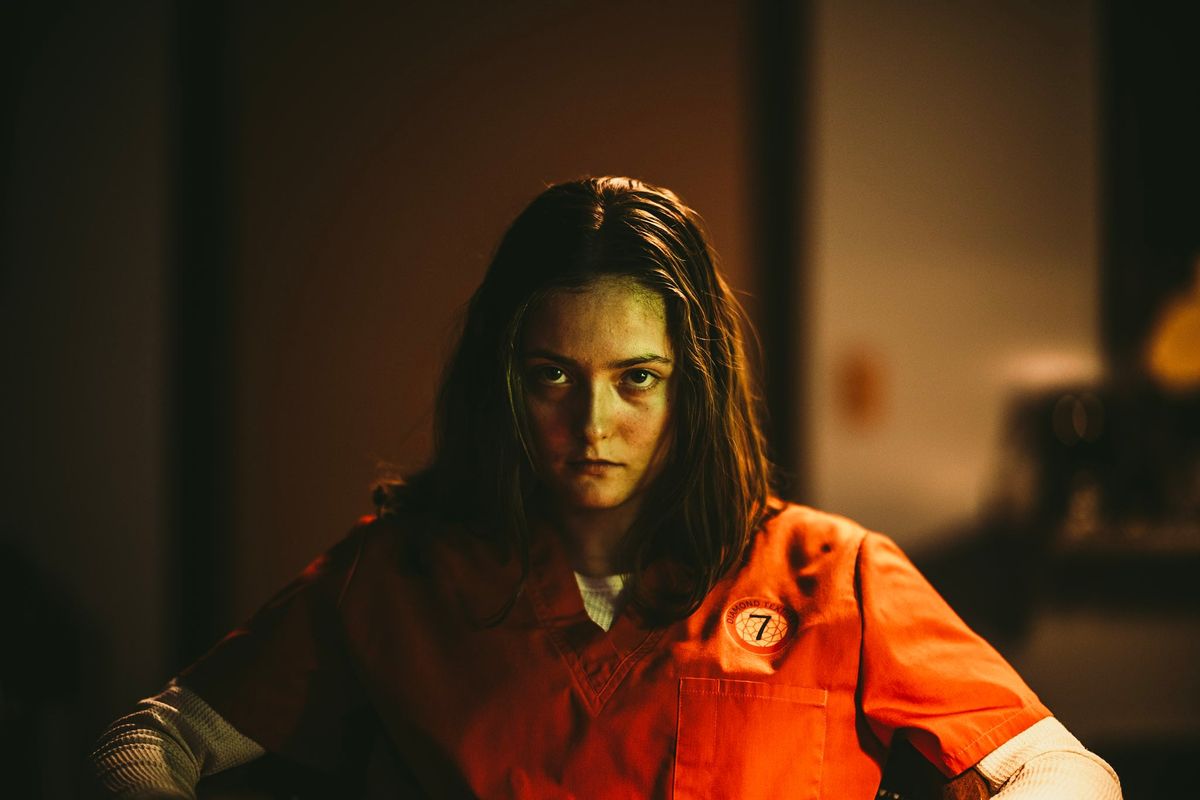
The other world premiere, “Tell No One,” (8:30 p.m. Saturday, the Garland) is another film with strong ties to the area, coming from director J.D. McKee, who Porter said has been in the Spokane film scene for years, and a primarily local crew.
In the film, a young woman wakes up and discovers she is in a hospital where nothing is as it seems. Drugged, confused and tied to her bed, the woman, aka Patient 7, fights to regain her memory and escape from captivity.
Porter is also excited to watch “Evergreens” (7 p.m. Friday, Myrtle Woldson Performing Arts Center), which a programmer couldn’t recommend enough.
The film, directed by Jared Briley, “Evergreens” follows two unlikely companions (Darby Lee-Stack and Edouard Philipponnat) who connect by chance and travel across Washington state. It’s already been screened at the Seattle and Sedona international film festivals.
The programmer told Porter about the music and the overall vibe of the film, and Porter instantly knew it should open the festival.
“I was like ‘OK, that’s perfect. Let’s do that. I’m going to watch it and discover it with everyone else, because I love to do that,’ ” he said.
He is also excited for audiences to see “The Fisherman” (4 p.m. Sunday, Magic Lantern), which he watched last year. Directed by Zoey Martinson, the comedy follows a boat chief trying to keep traditional fishing alive in his Ghanaian community with a ragtag crew, which includes a talking fish.
“It’s surprising in all the ways that I really like as a film watcher,” Porter said. “There’s surprising in a way that you’re like, ‘I could live without that,’ but then there’s surprising in the way that you’re like, ‘Oh, I love that twist. That’s hilarious. I did not see that coming.’ ”
On the other end of the emotional spectrum, Porter is also looking forward to “Meadowlarks,” (4 p.m. Saturday, Magic Lantern) which tells of the impact of Canada’s Sixties Scoop, during which more than 20,000 Indigenous children were taken from their homes and adopted into non-Indigenous families.
Directed by Tasha Hubbard, “Meadowlarks” stars Michael Greyeyes, Carmen Moore, Alex Rice and Michelle Thrush as four Cree siblings who were separated as children and are reuniting in their 50s.
“It’s such a warm, but also real film,” he said.
SpIFF also features such programming as Docs and Donuts, a collection of short documentaries, animated, Northwest, U.S., world and queer shorts, a SpIFF Awards Party, which features such awards as Most Promising Filmmaker and Best Northwest Short, and Catching “Train Dreams,” a panel featuring local cast and crew from the Oscar-nominated film, which was filmed in the Inland Northwest.
“Train Dreams” was a milestone in Northwest cinema, Porter said, and boosted the reputation of everyone who worked on the film.
Twenty years ago, Porter said the emphasis of SpIFF was to recruit international films. Now, with an even more developed film scene, and success stories like “Train Dreams,” the goal has turned to encouraging local filmmakers to explore the craft.
Many programs even have filmmakers, cast or crew scheduled to attend, giving aspiring filmmakers a chance to hear about a film from the creators themselves.
But even if someone isn’t a future filmmaker, Porter still hopes they can embrace the festival experience and see as much as they can. Film festivals, after all, he said, invented binge watching.
“On Monday, I want them to be like, ‘Man, I don’t want to see another film until next year.’ Or they see their children, and they’re like, ‘Who are you?’ ” Porter said. “I want them to be nothing but SpIFF. Come out and binge with the rest of us.”