
Arts commission approves gold coin with Trump’s face on it
WASHINGTON – President Donald Trump’s handpicked arts commission voted Thursday to approve a commemorative, 24-karat gold coin bearing Trump’s image, brushing aside debate over whether the coin violates American tradition.
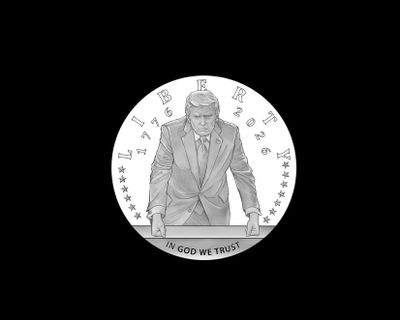
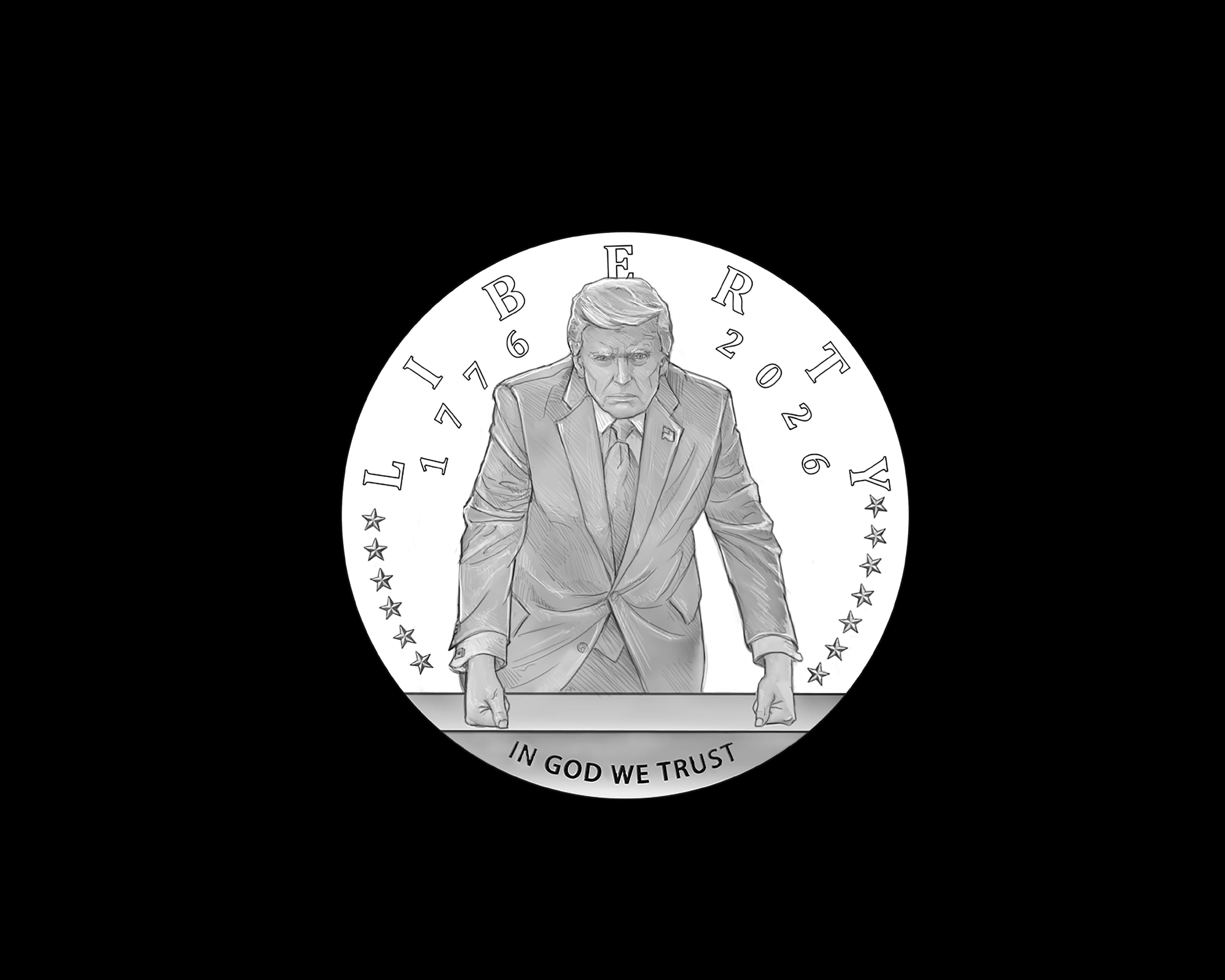
The coin, which is supposed to commemorate the nation’s 250th anniversary, shows Trump with his fists pressed against a desk and a glowering expression on his face. The back of the coin features an eagle.
It is one of at least three coins featuring Trump’s face, including a $1 coin that will circulate as currency, that the administration is planning.
The U.S. Commission of Fine Arts, which advises federal agencies on design matters, voted unanimously on Thursday to approve the coin’s design. The approval was a procedural hurdle as the Trump administration pushes ahead with the project.
Many of America’s founders, including George Washington, were fiercely against taking steps that would make its government officials appear like kings, and that included featuring them on the country’s coins. Only a handful of times in history have people been featured on U.S. currency while they were alive.
The administration’s move to mint official coins with Trump’s face is also legally aggressive. An 1866 law called the Thayer Amendment states: “Only the portrait of a deceased individual may appear on United States currency and securities.”
But the Trump administration appears to be resting its actions in part on the argument that a coin is different from currency or a security, and it is not clear whether anyone would have legal standing to challenge the matter in court.
Administration lawyers have also cited two other statutes that they say give Treasury Secretary Scott Bessent the power to authorize the minting and issuing of coins with Trump’s face. A provision of Section 5112 of Chapter 31 of the U.S. Code allows the minting of gold coins with “specifications, designs, varieties, quantities, denominations and inscriptions as the secretary, in the secretary’s discretion, may prescribe from time to time.”
And the Circulating Collectible Coin Redesign Act of 2020 gives the Treasury secretary temporary power in 2026 to issue $1 coins “with designs emblematic of the United States semiquincentennial.” The statute does not define what counts as “emblematic” of the country’s 250th anniversary, which the administration appears to believe leaves it free to decide that an image of Trump is such a symbol.
On Thursday, Megan Sullivan, the acting chief in the office of design management at the U.S. Mint, told the panel the plans for the gold coin were not part of the 2020 legislation authorizing special coins to celebrate the anniversary.
Instead, she said, they were being made under Bessent’s authority.
Sullivan said the Treasury had not yet determined the size of the coins or how much they would be valued, but she suggested they would be worth hundreds of dollars each. Members of the panel encouraged her to make them as large as possible.
“I think the president likes big things,” said James C. McCrery II, the vice chair of the panel.
No one at the meeting spoke against the idea. Before taking the vote, board members seemed mostly concerned with whether Trump liked the design.
Trump has pushed to eliminate any resistance within his administration to his design plans. He fired the entire board of the Commission of Fine Arts last year and began appointing allies to the panel; they included his former receptionist.
“Does the president know about this design? Has he looked at it?” the panel’s chair, Rodney Mims Cook Jr., asked during the meeting.
Sullivan said Trump had personally approved the design.
“Yes, it is my understanding that the secretary of the Treasury presented this design, as well as others, to the president and these were his selection,” she said.
Chamberlain Harris, Trump’s former receptionist who is now the deputy director of Oval Office operations at the White House and sits on the panel, praised the design as depicting Trump’s strength.
She said the president was “very particular about what is put out there about him. So obviously, if we’re going to depict him, I want him to have seen that, to have reviewed that, and to be in favor of said image.”
“I know it’s a very strong and very tough image of him,” she added, “and I think it’s fitting to have a current sitting president who’s presiding over the country over the 250th year on a commemorative coin for said year.”
Sullivan said the coin bearing Trump’s image would be produced along with a number of special coins authorized through legislation to celebrate the nation’s 250th birthday.
The Commission of Fine Arts had already recommended in January designs for two smaller coins showing a close-up of Trump’s face on one side and a heraldic eagle on the reverse. One would be a $1 circulating coin, while the other would be a collectible made from an ounce of 24-karat gold and marked with a face value of $250.
Based on that recommendation, Bessent earlier this month approved moving forward, and the U.S. Mint in Philadelphia has already produced prototypes, according to a person familiar with the matter who spoke on condition of anonymity to discuss the sensitive issue.
Last month the Citizens Coinage Advisory Committee, which is statutorily required to review the themes and designs of coins, declined to review the proposed Trump gold coin – shortly after also declining to review a Trump $1 coin being proposed as part of the semiquincentennial celebrations, and featuring the sitting president in profile.
The U.S. treasurer, Brandon Beach, said in a statement Thursday that the coin advisory committee “had multiple reasonable opportunities to review the proposed designs,” but “expressly declined.”
“Accordingly, the Mint’s statutory obligation to seek CCAC review has been fulfilled,” Beach said – something that the coin advisory committee’s chair, Donald Scarinci, disputed.
“If the Mint makes these coins without the review of the CCAC, the coins are illegal,” Scarinci said. But he acknowledged that there was no way that the committee would review these proposed Trump coins anyway.
Why? “Because this is what kings and dictators do and there’s no getting around that,” Scarinci said. “This is a democracy, not a monarchy, not a dictatorship. And democracies do not put their elected leaders on coins.”
This article originally appeared in The New York Times.