
‘The land remembers, and so do we’: Dozens walk for missing Indigenous people awareness month
The last time Jermain Charlo, also known as Jermain Monigeau or “Liz,” was seen, she was getting out of a car filled with her friends in 2018 heading to the Flathead Reservation in Montana that is home to many Salish, Kalispel and Kootenai people. She opted to stay in Missoula where surveillance cameras captured her walking downtown.
Kalispel tribal elder RJ Nomee said his daughter Valenda Underwood, who is Charlo’s aunt, never recovered from the loss.
“We still have no idea what happened,” Nomee said. “Her sons are growing up without her, and my daughter still carries that in her heart.”
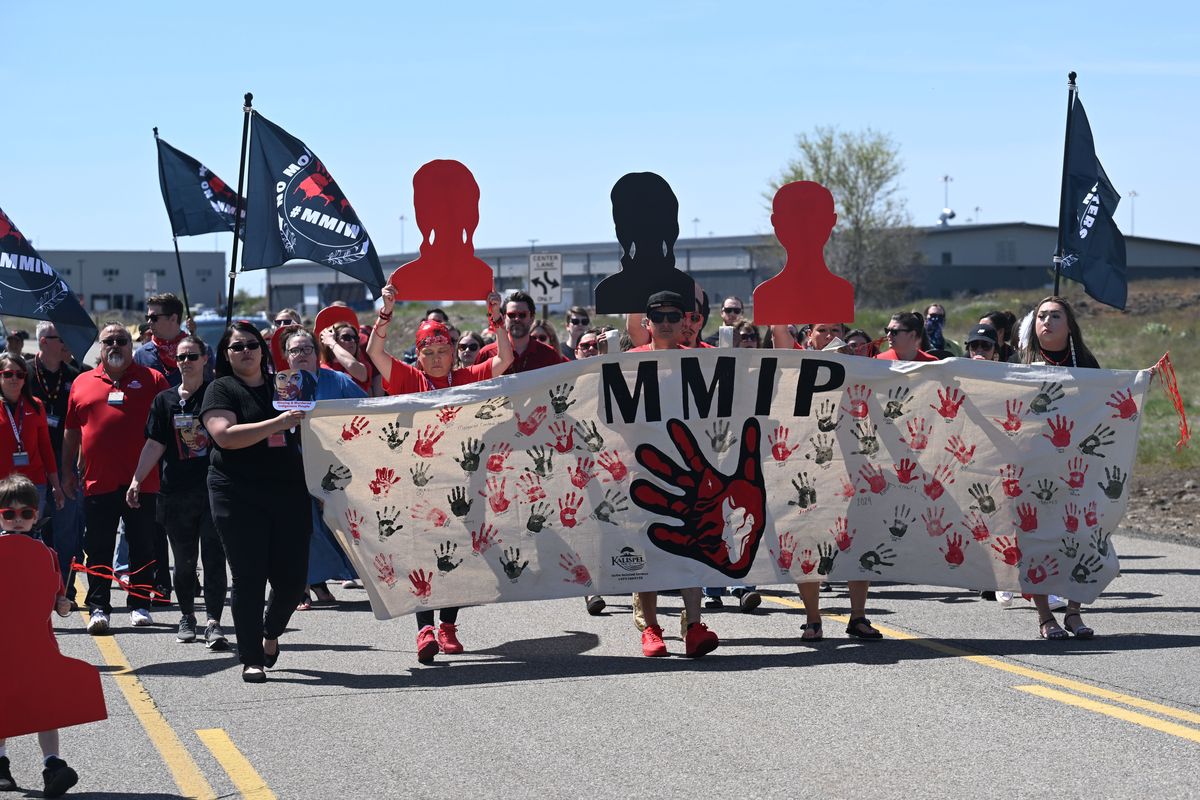
Dozens of people wearing red dresses and black and red shirts gathered at the Northern Quest Resort and Casino on Friday to recognize and spread awareness about Missing and Murdered Indigenous Women and People Awareness Month, which is May. The walk is the first of its kind in Airway Heights, organized by the Kalispel Tribe and Northern Quest.
In Washington, fewer than 2% of the population is American Indian or Alaska Natives, but they are twice as likely to be homicide victims and 21/2 times more likely to have unresolved homicide cases, according to a release from the Kalispel Tribe of Indians.
More than 108 Indigenous people are listed as missing in Washington state, according to Ashley Carter, the assistant manager for the Kalispel Tribe’s victim services.
“Every red dress represents a life that should still be here,” said Annette Pierre, the Kalispel Tribe’s director of archives. “This isn’t just an Indigenous issue, this is a human rights issue.”
Around 52% of the cases in the state are in Eastern Washington. In Spokane, there are 10 current cases – five include children, Carter said.
“The land remembers our missing and murdered Indigenous women, and so do we,” Pierre said. “Our communities have known loss for generations, but we also know resilience, and that’s why we’re here today.”
The missing people are often trafficked, Carter said.
“But they’re coming up missing or murdered. They’re just disappearing,” Carter said.
The Kalispel Tribe victim services works with Washington law enforcement and the Federal Bureau of Investigation, Carter said.