
YouTuber and author Marc Fryt shows life, destruction found by snorkeling Spokane River
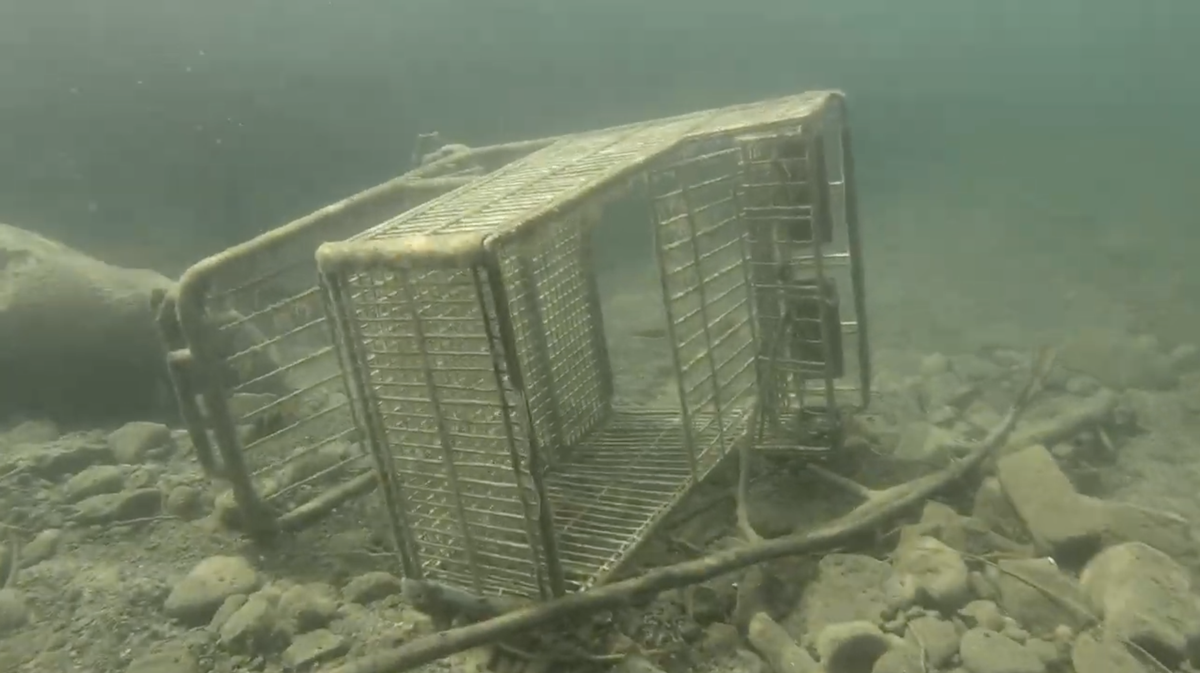
There are many stories beneath the surface of the Spokane River, and local fly-fisher, author and outdoor enthusiast Marc Fryt is bringing them to YouTube.
When a friend of Fryt’s offered to let him use his spare wetsuit for a snorkeling excursion in the Spokane River, Fryt happened to bring his GoPro camera. What he captured offers an immersive glimpse of the Spokane River that most never see.
Fryt’s camera pushes through the green-blue waters, sometimes clear, sometimes murky, showcasing his point of view as he explores. Parts of the riverbed look as you would expect – varied sizes of smooth boulders carried in by the Missoula floods and fish sprinkled throughout, making frenetic movements to navigate the swift current.
Other channelized parts near the city center look strikingly bare, with only small rocks and oddities like slime-covered shopping carts, and sparse sightings of fish moving slowly through the calm, dammed waters.
Fryt now has several snorkeling videos on his YouTube channel, named the Triple Haul.
“In a way, I kind of hope that my videos also help people to get curious about other things that they see while they’re out there on the river, not just the fish, not just the trees along the river. But also the other things that kind of stick out, you know like the bridges, the combined sewer overflow pipe that’s along the riverbank, the broken blocks of concrete, things that we normally don’t think of as being part of the habitat, but they absolutely are,” Fryt said.
In one video of Fryt snorkeling around the Trent Avenue Bridge upstream of downtown, he discussed the way the bridge piers encourage erosion around the base, resulting in the development of scour holes. He observed that Spokane’s iconic native fish species, the redband trout, hang around these holes as they now function as microhabitats for them.
Later on, he shows remnants of a wood bridge support and explains the beams offer shelter from predators, and they also allow for the formation of biofilm which feeds the insects that other river fauna feed on.
“Essentially these old remnants are acting like artificial reefs in the river,” said Fryt in the video.
A major feature of Fryt’s videos is education about how modern life interacts with natural settings. One of the major infrastructure features he discusses is Spokane’s combined sewer overflow system in hopes to generate awareness around how the system works and how it impacts the health of the river.
Spokane’s original wastewater collection system flowed directly into the Spokane River and Latah Creek. It wasn’t until the 1950s that the city built its first treatment plant and interceptor pipes to capture and treat the water prior to its release into the Spokane River.
A combined sewer overflow routes wastewater and runoff into the same system, and during normal operations, all of this water gets routed into the interceptor pipes to the Water Reclamation Facility. When runoff overwhelms the capacity of these interceptor pipes, the pipes overflow directly into the river without any treatment.
“I think our city has done a phenomenal job over the years. I think Spokane is ahead of the curve with a lot of cities, and they’ve done a great job with building things like (combined sewer overflow) tanks, so big tanks under the ground to capture storm water. So when we get a big storm, we can capture a lot of that storm water, and then once the storm passes, then we can release it over to the wastewater treatment plant,” Fryt said.
Fryt notes that reduction of wastewater overflow not only protects fish from pollutants and excessive dissolved oxygen (which poses a suffocation threat for species like redband trout), but it also protects humans from biological contaminants like E. coli while recreating in the river. The health of the river has improved, but there is still work ahead.
“If you snorkel the Spokane River and you feel like you should be seeing more fish, you’re totally right, we should have much higher numbers of fish living in our river,” Fryt said in one of his videos.
He goes on to explain several factors that negatively affect fish populations, such as the presence of dams along the river, leftover pollutants from mining and other industrial activities, increases in sediment due to agriculture (known as sediment loading), as well as loss of vegetation alongside the banks of the river.
When Fryt isn’t snorkeling, he’s probably fly-fishing. And by now he is plenty used to the astonishment of onlookers who spot him fishing in Riverfront Park.
“People are just utterly surprised that there are fish living right there. And if I’m lucky enough, I’ll catch a fish and show them, and I can talk to them about the life history of it and what it’s indicating about water quality,” Fryt said. “But that’s kind of the biggest lesson is just that initial awareness of life that is in the river and how we’re connected with that.”
It was Fryt’s lifelong passion for fly-fishing that originally sparked his interest in exploring urban waters and educating people on the living relationship that cities have with the natural environment they are built on. This is the topic of his newly released book, “The Guide to Urban Fly Fishing: How to Explore and Enjoy Your Local Waters.”
Although Fryt grew up loving the outdoors, a fly-fishing experience in Columbus, Ohio, opened his perspective on the wildlife opportunities that urban settings can offer.
In Columbus, Fryt lost the easy access to mountain streams he had become accustomed to living near the mountains of the Olympic and Cascade ranges, and his passion for fly-fishing began to wane. A few mentors in his life encouraged him to try fly-fishing in the waterways near the city.
“I eventually walked the 10 minutes from my apartment over to the river and looked down off the bridge, a bridge that I had crossed over so many times commuting to work. And I looked into the river, and lo and behold, there were fish up and down the bank and not a single person down there fishing,” Fryt said.
“And so I started fishing the whole bunch of waters there in Columbus, and I thought it was the coolest thing ever. I was a kid again. I was exploring. I felt like I had discovered, like, a little oasis right there in the middle of a city of 2 million people, and I was coming across new species of fish, I was seeing wildlife I never knew lived in the city with me, and I just kept getting pulled into it more and more.”
Soon after Fryt realized how few people were talking about fishing in urban environments, prompting him to connect with other anglers online and eventually compiling what he learned into a book.
“The beauty of it is a fly rod is a doorway.”
If you’re not a fishing enthusiast, Fryt’s book has plenty of other information for nature lovers living in cities.
“I wanted to pull in a lot of the science with the book … from urban ecology to hydrology, and learning more about infrastructure, civil engineering, storm water infrastructure, and of course, biology with the fish, and entomology with, like, aquatic life and the insects,” Fryt said.
Fryt is on tour with his new book, but he plans to get back to filming more of his snorkeling adventures this summer when he has free time.
You can view his current videos at youtube.com/@the_triple_haul, which feature snorkeling POVs of stretches of the river near the Trent Avenue bridge, between Spokane Falls Boulevard and Division Street, and the Upper Spokane River. “The Guide to Urban Fly Fishing” is on sale at Auntie’s Bookstore and bookstores everywhere.