
Cool critters: Spittlebugs are snug as a bug in a bubbly shelter
You’re walking outside or working in the yard when you spot a blob of frothy bubbles on a blade of grass or plant stalk. “Did someone spit on my lawn?” you wonder.
What you’re seeing is an evolutionary oddity in the animal kingdom.
That bubbly dollop is a fortress excreted from the rear end of a tiny young insect that’s safely hidden inside. And now that it’s nearly June, if you haven’t seen one of these structures yet, you likely will.
“Each year around this time, I start getting inquiries from people wanting to know what the spit-like substance is on grasses and other types of vegetation in yards and gardens,” said entomologist Richard Zack of Washington State University. “I assure them that it’s not spit and it won’t damage their plants.”
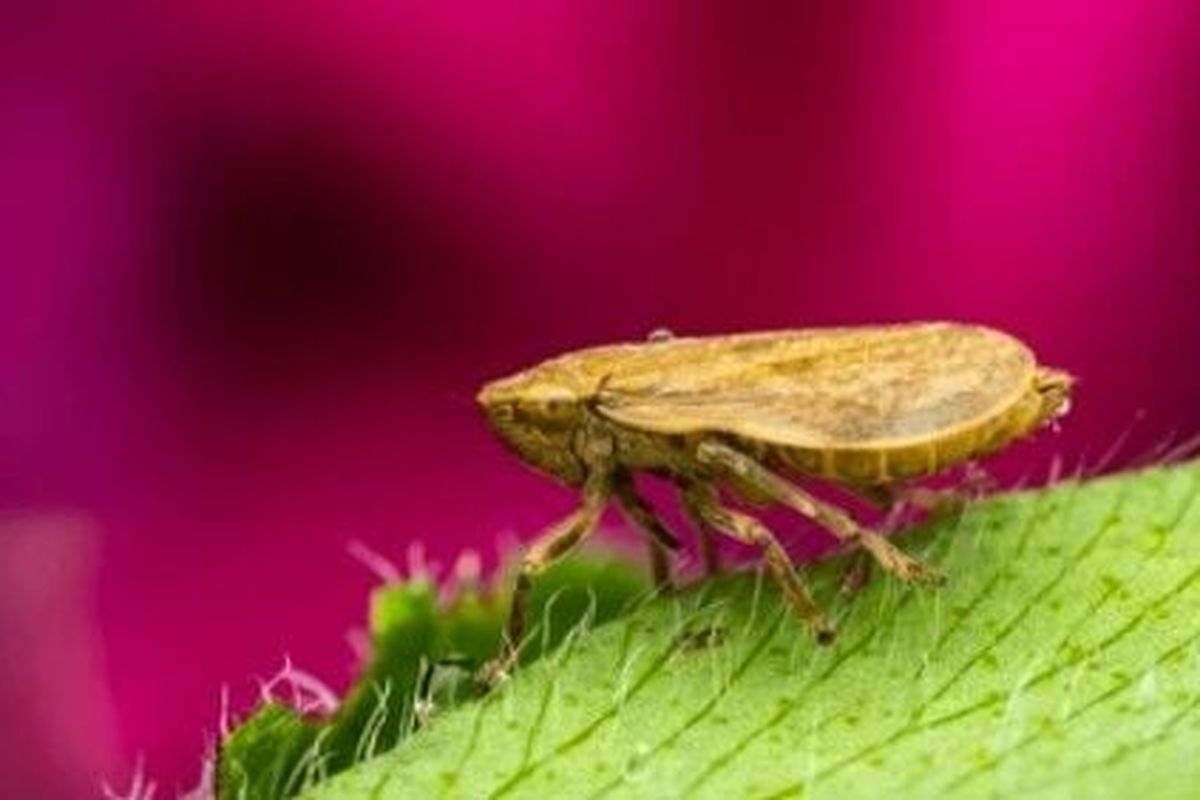
The maker of this concoction is the spittlebug, named after the whitish “spit” that the insect lives in during its nymph, or immature phase, of developing into an adult froghopper. Smaller than a pinkie nail, the bug is lime green with red eyes, yet it can be hard to see because it’s so well hidden within the mass of bubbles.
Which is precisely the point.
“The shelter they create protects them from predators,” said Zack. “It also insulates them from extreme temperatures and keeps their soft bodies from drying out in the sun.”
Of the more than 30 species of spittlebugs found in North America, the meadow spittlebug, scientifically known as Philaenus spumarius, is the most common and widespread, he explained. It is also the one you’re most likely to encounter in the Inland Northwest.
To ensure its survival, the spittlebug has evolved into a teeny bubble machine. After feeding on watery sap from the plant stems, they excrete a mixture of excess sap, glandular secretions and air pumped from the abdomen, said Zack – all of which “comes out of the bug’s anus as a frothy mass of spittle,” which technically isn’t spit because of where it comes from, he explained.
Then, according to the University of Wisconsin Extension, the nymph “produces as many as 80 bubbles per minute,” using its hind legs to pull the sticky bubbly mass over its body until completely covered.
Talk about ingenious. Spittlebugs construct an all-in-one survival shelter that regulates the temperature and provides a place where they can eat, hide and even get a moisturizer.
Not only that, but they’ve figured out an unconventional way to breathe inside a tightly-meshed mass of bubbles, said Philip Matthews, a zoology researcher at the University of British Columbia who published a study in the Journal of Experimental Biology in 2019.
“They have evolved to be able to poke the tip of their abdomen out of the foam to breathe air much like a snorkel, allowing them to remain protected and out of sight within their mass of wet bubbles,” said Matthews in an interview. “Other small insects that come into contact with the foam are likely to get stuck and drown,” he added.
Now that you’ll be seeing these sudsy homes, what to do about them?
Spittlebugs generally don’t harm firm-stemmed plants such as lavender and daisies but they sometimes inflict damage on softer plants such as strawberries, said Zack.
To prevent that from happening, “just hose them off with a strong spray of water,” he advises.
Since nymphs require five to eight weeks to develop, sometimes they’ll re-establish their fortresses nearby. Should this happen, keep in mind: Spit happens.