
A family quest
Fertility procedure gives couples renewed hope
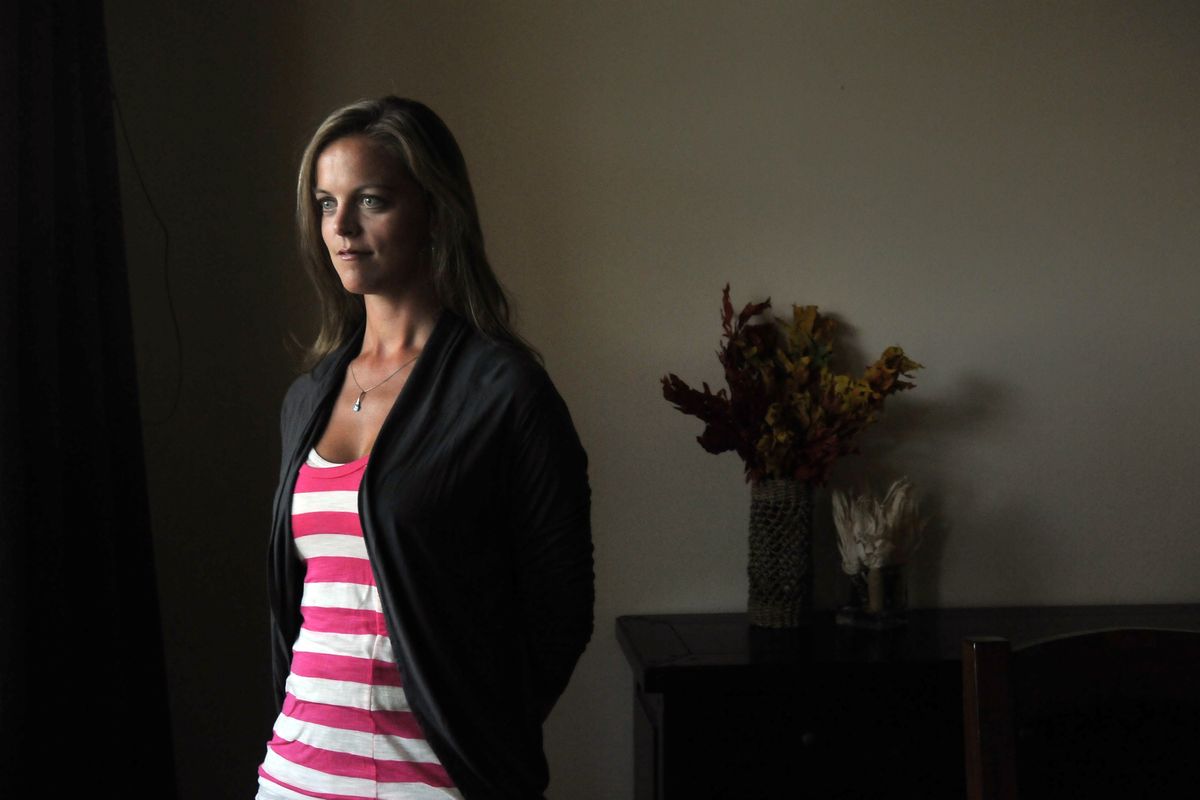
“Infertility was something I would occasionally read about, but it was never something I thought would affect me directly,” she says.
At age 31, Johnson is Spokane’s first and only female board-certified Washington state pediatric dentist.
For a year and a half she tried to get pregnant, but later discovered both she and her husband Bret had fertility issues that would make conceiving on their own nearly impossible.
After some traditional fertility treatments failed, their quest for a family led them to the Center for Reproductive Health in Spokane, and a cutting-edge fertility procedure known as vitrification.
First developed in Japan, vitrification is a process that flash-freezes either unfertilized eggs (oocytes) or embryos.
Older freezing techniques were so slow that ice crystals formed in the process. This damaged the eggs or embryos, decreasing the chance of success.
In vitrification, much of the water in unfertilized eggs or embryos is removed. An anti-freeze solution is applied, and at the rate of minus 23,000 degrees per minute, the egg or embryo is flash-frozen.
With the entire process taking place in a matter of minutes, this new freezing technique greatly reduces the risk of damaging ice crystals. Many studies show that vitrified embryos have higher post-thaw survival rates than the “slow-freeze” embryos.
The end result for unfertilized eggs, says Dr. Edwin Robins, is “they have essentially the same potential as fresh eggs.”
Robins is medical director of the Center for Reproductive Health and a reproductive endocrinologist. He and his organization have been offering vitrification in Spokane since July 2010.
According to the National Institute of Child Health and Human Development, many women today are waiting to have children until their 30s or 40s. For some, this may be due to education, career or lack of a partner. Others may be challenged with a family history of early menopause.
Twenty percent of women in the U.S., says the institute, now have their first child after age 35, when fertility is normally beginning to wane. One- third of couples in which the woman is 35 or older have trouble conceiving.
For women who may be unable to conceive until it’s biologically too late, vitrification theoretically offers the gift of time.
While men continuously produce new sperm, a woman is born with all the eggs she’ll ever have – so time affects the quality of her eggs. Freezing eggs through vitrification could allow women to use them later in life, when the eggs would ordinarily be less viable.
Robins says, however, that less than 1 percent of his clients fall into that category. Most are women facing the loss of fertility from cancer treatment, like Adelle Hye.
“I was diagnosed with advanced breast cancer in November 2010,” says Hye, an operations analyst for Bank of America. She learned of her illness shortly after celebrating her 34th birthday.
Hye has a strong family history of breast cancer, so while the diagnosis wasn’t a shock, the prospect of losing her fertility was.
“It never dawned on me that I wouldn’t be able to have kids,” she says.
Soon after her diagnosis, Hye had a radical double mastectomy and was told by her oncologist that she would never be able to have children of her own. She and her husband Larry had already been trying, with no success, for four years.
“That news crushed both of us,” she says.
But Hye wouldn’t take no for an answer. She hired a new oncologist who worked closely with Robins. In January, prior to her cancer treatments, they moved quickly to create an unconventional plan that would allow them to harvest her eggs while minimizing her exposure to estrogen – something that would only encourage cancer growth.
They were able to retrieve nine eggs during the procedure, but in the end only one embryo was successfully created and vitrified. As part of her overall cancer treatment, and in order to eliminate estrogen exposure for the remainder of her life, Hye had her ovaries removed soon after the egg harvest.
Now the Hyes’ single hope at having a child of their own sits frozen in Spokane’s Northwest Cryobank, awaiting implantation in a surrogate.
“I can’t carry a pregnancy because of the estrogen exposure,” says Hye.
Finding a surrogate was yet another hurdle, but her only cousin – someone Hye says is like a sister to her – volunteered to carry the pregnancy later this year.
The downside, as with many treatments, is cost.
While Hye’s insurance has covered nearly all of her treatments, Johnson’s insurance didn’t cover anything. She and her husband initially invested $15,000 in a fertility package that included just the harvesting and future implantation.
But the freezing of an unfertilized egg requires additional procedures, at additional costs. For instance, a frozen egg can only be fertilized through a procedure that injects the sperm directly into the egg, says Robins.
Adding all the fertility treatments combined, along with egg/embryo storage at Northwest Cryobank, the Johnsons say their out-of-pocket fertility bill will soon reach $30,000.
Still, Erin Johnson says, “There’s no looking back.” Had they not taken the financial risk to start a family, she says, “We always would’ve wondered.”
Fertility treatments also carry health risks. While Johnson was fully informed of her choices, she says she suffered from “hyperstimulation sickness” – a potential side effect when trying to stimulate the ovaries prior to egg harvesting.
The medications caused Johnson such intense bloating from fluid retention that she was sent to the hospital for drainage.
While Hye and Johnson have overcome challenges throughout their journeys, both credit the support of their partners, family and faith for getting them through the darker nights.
After extensive reconstructive surgery and chemotherapy treatments, Hye says she realized, “I can’t control my circumstances. But I can control my attitude towards them.”
And even though her husband felt hopeless at one point, she adds, “The experience has brought us closer together.”
Larry has already grown very attached, she says, to their single embryo at the cryobank.
While Hye waits for the fall, when her cousin’s work schedule will permit the timing of the surrogate pregnancy, Johnson has received good news: She’s pregnant.
Of the two embryos that were implanted in July from her frozen eggs, one has taken hold. Her care will soon be transferred over to an obstetrician where her pregnancy will be treated like any other.
Looking forward to their baby’s arrival next March, the couple may face an unusual challenge once they decide their family is complete: Erin’s egg harvest and fertilization yielded 14 viable frozen embryos. She says if there is a surplus when their attempts to create a family are over, the couple may consider donating the embryos.
“I know there’s millions of people that can’t do it at all,” she says.