
Driver safety class beats ticket, death
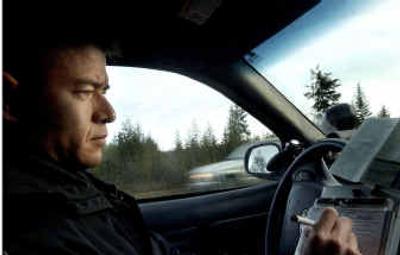
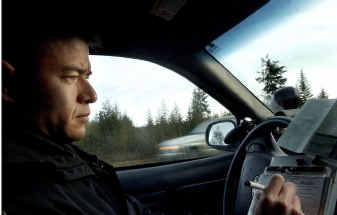
It is 6:30 a.m. and Idaho State Police Trooper Mark Todd is patrolling U.S. Highway 95. Daybreak has yet to paint the horizon red and orange – making it a cold and icy morning for drivers.
With nearly 30 deaths or more each year on the highway, some around Idaho have called for reconstruction to make the narrow stretches of the road safer. Others, like Todd, point to the increasing number of aggressive drivers on the road.
“The road isn’t gonna wake up in the morning and kill somebody,” he says. “It doesn’t have some kind of quota, it’s an inanimate object. It’s the people that make things more difficult than they have to be.”
While there are wrecks each year – each one tragic to the victims’ families and friends – many drivers make it safely to their destinations on the highway, Todd says.
He points to a phenomenon he calls “keeping up with the Joneses” as a large factor in why people wreck on the highway.
“It’s a result of society’s attitude … no one leaves early, or carpools, and they try to do too much in a day,” he says. “People need to slow down, and in a road safety course I teach, I tell them, ‘If you’re going to be late, be late.’ “
When stopping speeders or other lawbreakers, Todd informs them of some of the statistics he teaches in his classes.
While pulling over a speeding black SUV from Washington state, he lets the driver know the risks of going too fast. According to the National Center for Statistics and Analysis, the 30-something driver, who has about eight passengers, including a baby in a car seat, is more likely to die from a traffic crash than heart disease, homicide or HIV.
“There are a lot of crosses up here from people who have died,” Todd tells the man. “Slow down, because you’re in the leading bracket of those who die in motor vehicle crashes.”
He gives the man his ticket, and his wife thanks the trooper.
With a small guardian angel pin on a white paper placard pushed into his dash near his speedometer, Todd turns off his swirling emergency lights and watches for those challenging the icy asphalt of Highway 95.
He says he tries to inform every driver he pulls over of what they were doing and what can happen to them, but in one day, he can’t speak to the more than 11,000 drivers who travel the road. That’s why, he says, he enjoys the road safety courses he instructs, where some come because their employer has set up the class, or because they can get discounts on car insurance.
“We’re tired of talking to people after they’re dead,” Todd says.
In about a two-hour timeframe, Todd uses a PowerPoint presentation to discuss aggressive driving, seat belts, drunken driving, defensive driving and winter driving.
He says it’s easier to have people learn about safety issues in a classroom environment, rather than when they are grumpy over a ticket or warning on the road.
As morning light hit the pavement and thawed the sparkly ice, the trooper says even in optimal conditions people still crash, and it usually shouldn’t be called an accident.
“About 95 percent of crashes are related to human error,” Todd says.
“As soon as you use the word ‘accident’ you take away responsibility… it’s something that allows you to screw up and have an excuse for it.”
After pulling over one woman for speeding, he explains that it would have been no accident if she had crashed.
“It wasn’t an accident that this lady didn’t know her speed – it sounds harsh but I know it, they know it,” he says.
This particular shift – on a weekend over the holidays – holds far less traffic than normal weekday traffic, Todd says, and with the growing population and the increasing number of citizen calls, it is hard for his office to keep up with only five to seven troopers on a patrol at one time.
“We just want people to slow down,” he says.
“We get to do the door-knocking when someone is dead or hurt.”