
Pump parity
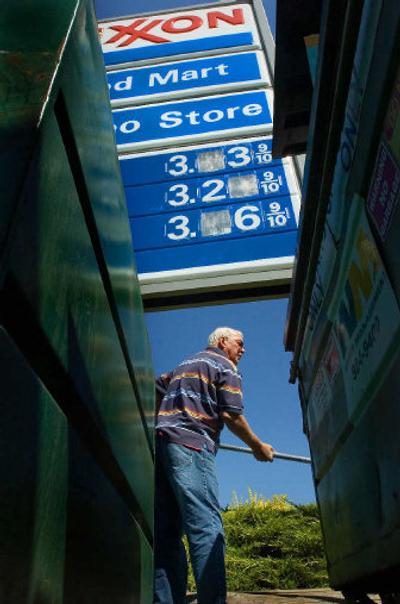
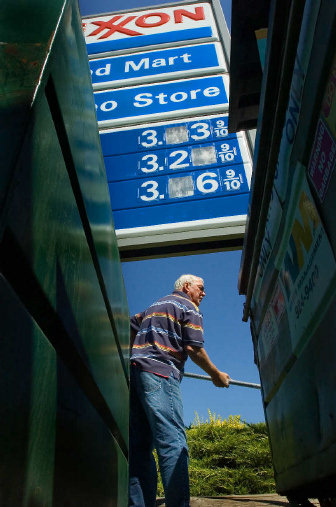
Rising gas prices are creating a pain in the pocketbook for Northwest motorists, who are adjusting to paying over $3 a gallon and lamenting what the future may bring.
“It hurts a lot. It cost $56 to fill my fuel tank when not long ago it was $29,” said Chris McLain, a 42-year-old motorist who filled up his Ford Explorer at the Spokane Valley Costco on Tuesday.
With gas prices fluctuating almost daily, the closure of a BP pipeline that’s a major supplier to Washington refineries and the busy Labor Day holiday nearing, some motorists have found cheaper fill-ups by shopping around. But does it really make a difference?
McLain, a father of two, said it does. At Costco, he paid $3.09 a gallon — a dime a gallon less than some of the higher-priced pumps.
“It ends up saving us some money, yes. A few cents a gallon really adds up,” McLain said.
The Spokesman-Review spent Monday and Tuesday visiting nearly five dozen gas stations stretching from Cheney to Coeur d’Alene looking for pricing trends on regular unleaded gasoline.
The price ranged from $2.89 at Costco in Coeur d’Alene to $3.23 at the Four Lakes Exxon. Sometimes even within neighborhoods, driving a few blocks made a dime’s worth of difference in the per-gallon cost. Still, the high prices don’t deter some motorists, who say convenience, rather than cost, determines where they fill up.How much money can drivers save by pinching pennies? Studies have found that Americans use about 10 gallons of gas per week per car. That means a two-car family frequenting a station charging 10 cents less per gallon would save over a hundred dollars a year on fuel. Drivers with less fuel efficient cars or recreational vehicles stand to save more.
Most gasoline is sold by independent operators in conjunction with convenience-store items such as beverages and groceries. When it comes to pricing, the stations uniformly charge a fractional price of 9/10 of a cent — meaning motorists can round up a penny a gallon anywhere they fill up.
Only three stations visited charged less than $3 a gallon and all were in Coeur d’Alene. According to the American Petroleum Institute, Idaho drivers pay a gas tax of 43.4 cents per gallon, below the national average, while Washington has the sixth-highest gas tax in the nation — 52.4 cents per gallon.
Some of the cheapest gas available in Coeur d’Alene was at Costco, which requires membership, at Safeway Food and Drug, where cardholders get a discount, and at Albertsons.
Arvin Hansen, a gasoline attendant at the Spokane Valley Costco, said the store’s lower prices tend to lure the big rigs and that when prices increase, so does his business.
“We get a lot of campers and cars with boats coming through all day long. Come fall, all the snowbirds will come here to gas up before they head south in their motor homes,” Hansen said.
In Spokane County, the highest price was found on Monday at the Exxon mini-mart near the Four Lakes Cheney exit off Interstate 90. The store was charging $3.23 a gallon, however, on Tuesday storeowner Joe Wyles passed along a price break from a supplier and lowered the cost to $3.19.
As an independent operator of a single store, Wyles said he depends on sales of gasoline, groceries and general merchandise to make a profit.
Sara Banaszak, senior economist for the American Petroleum Institute, said stations in very competitive locations generally operate on tight margins, earning one or two cents per gallon.
In Wyles’ case, having a prime location near the freeway and far outside the downtown core allows him to charge more than other stations.
Still, the money he makes off gasoline sales is minuscule when compared with oil company and credit card company profits off those same sales, he said. Credit card companies earn 2 percent per charged transaction, or more than six cents per gallon.
Small stations sell about 80,000 to 100,000 gallons of gas a month, Wyles said. This year his store sold the same amount of gas as last year, leading him to believe that motorists aren’t cutting back on driving.
His store, located on the main drag to Eastern Washington University, provides a glimpse into the driving habits of young students, who pass by single-file daily, one person per car.
“The bottom line is the economy is strong and parents have a lot of money and they’re giving it to their kids. They’re not car-pooling it,” Wyles said.
Dan Charette, a 43-year-old motorcyclist from Ohio, didn’t flinch when he paid the $3.23 a gallon. He said he has crossed the country this summer and just arrived from the Sturgis Motorcycle Rally held in South Dakota.
“You’re about the same as I’m paying back home. It was a little cheaper in Ohio,” Charette said.
However an RV driver from Montana with a bigger tank to fill disagreed. Dennis Ball, a 35-year-old Kalispell resident who was driving his dog Cody to Washington State University for cancer treatment, said gas cost 15 to 20 cents more per gallon in Washington.
“It’s brutal here,” noted Ball, who’d recently purchased the 38-foot Winnebago.
Sheila Morley, energy assistance case manager for Spokane Valley Community Center, said the rising prices are particularly hard on the working poor. The center has budgeted about $450 a month to provide vouchers to help people get to work.
“It’s just this whole circle and all of it affects low-income families so much. Many don’t drive fuel efficient cars,” Morley said.
For those looking for lower prices, sometimes driving a few blocks from a busy intersection or off-ramp can cut costs.
In Washington, stations at those high-traffic areas commonly charged $3.19 per gallon. A Divine’s south of the freeway at Pines Road and Mission Avenue charged $3.19, while a 7-Eleven a few blocks north charged $3.09. Farther south on Pines, a Zip Trip charged $3.08 a gallon, while a Holiday near Sprague Avenue and Pines charged $3.09.
Prices increased farther south, with a Shell station at 32nd Avenue and Pines charging $3.15 a gallon.
Near the Argonne Avenue exit, a Shell and Zip Trip, both on the south side of the freeway, each charged $3.19 per gallon. However, a Holiday mini-mart north of the freeway charged eight cents less per gallon and an Albertsons Express at Trent Avenue and Argonne charged $3.10.
Stations in close proximity sometimes priced their pumps identically.
Near the freeway, a Conoco charged $3.05, but two mini-marts on a single block of Northwest Boulevard — a Qwik Stop and a Texaco — lured customers with prices of $2.99 a gallon.
Troy Seaboch, a 43-year-old RV salesman from Coeur d’Alene who regularly fills up his Cadillac Escalade at Texaco, said station location, rather than price, governs where he fills his tank.
“For me, I’m a convenience guy,” he said, adding that his wife is much thriftier.
Seaboch said rising gas prices have caused concern in the recreational vehicle industry, but that many RVers are attuned to the traveling lifestyle and are willing, and able, to pay the added fuel costs.
Like many drivers who question the record profits of companies like ExxonMobil, he wonders how pricing is decided.
“It’s almost like a price-fixing thing,” he said.
Closer to the Idaho-Washington border, prices climbed. In Post Falls, a Shell station north of the freeway charged $3.08 a gallon, while a 76 station south of the freeway was a penny more expensive.
In North Spokane, prices ranged from $3.10 at a Zip Trip 76 on Cascade Way and Division Street to $3.19 at a Chevron at Wellesley Avenue and Division. A Cenex station at Mansfield Avenue and Monroe Street had gas for $3.11.
In South Spokane, prices were notably higher, ranging from $3.19 at a Conoco at 29th Avenue and Grand Boulevard, to $3.16 at a Divine’s Shell at 38th Avenue and Grand. The town of Rockford had a Cenex selling gas for $3.14 a gallon and the Freeman Store had gas for $3.17 a gallon.
Motorists exiting Interstate 90 in downtown Spokane faced a mixed bag, with prices ranging from $3.19 a gallon at a Chevron on Third Avenue and Monroe, to $3.11 for a Shell station at Second Avenue and Walnut Street.
As far as fuel quality from one station to the next, Banaszak, of the American Petroleum Institute, said one brand may well equal another because all companies must adhere to specific government regulations.
The American Automobile Association says that residents of Western states are some of the biggest car travelers over the Labor Day weekend. While predictions aren’t yet available for the upcoming holiday, last year AAA estimated that 7.2 million West Coast residents would hit the road by car, truck or RV.
Wyles doubts that Labor Day travel will be affected much by the rising gas prices. If customer comments he has received so far are any gauge, motorists will continue to go with the flow.
Said Wyles, “I had more complaints when gas was at a dollar a gallon than I do now.”