Child’s passion could have enriched anything
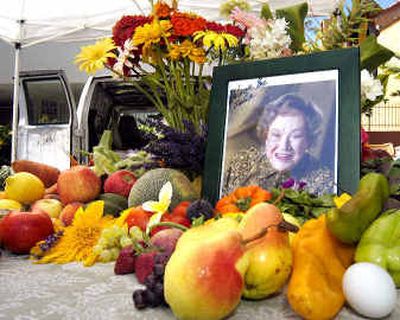
In 1989, seasoned gastronomes and epicurean pilgrims alike eagerly awaited the October debut of Julia Child’s epic “The Way to Cook.” Lavishly illustrated with large, detailed color photos to show the way through unfamiliar methods, the book was meant to teach cooking skills, rather than simply provide recipes. It was, according to the advance publicity, Child’s magnum opus.
A scant four months earlier, the Detroit News hired me as its food writer. It was a big jump for me; I came from a much smaller newspaper, where writing about food was just a fraction of my job. In Detroit, back on my Wolverine-bred home turf, food writing was all I would do. I was eager, but anxious; I wanted desperately to do well, but wasn’t confident I could do so.
Blessed with an editor of large vision, I was dispatched to Child’s home in Cambridge, Mass., to conduct a face-to-face interview, for a story to be published in conjunction with the new book’s release date. Too naive to be nervous, I flew to Boston as happy as a lark and burbling almost as noisily.
My mother, always my toughest critic, was impressed that I would meet La Child. Mom and I spent many Saturday afternoons watching Child’s groundbreaking television series, “The French Chef,” on WKAR-TV, the Lansing public television station. Mom was an avid cook, and often had me, perched on a stool, reading one recipe or another from Child’s first book, “Mastering the Art of French Cooking,” to her as she worked in the kitchen. “Should we try that one this weekend?” she would say. “What would you serve with that?” Tough questions they were, for a 10-year-old.
Reality check
But as the morning of the interview dawned, a blustery Massachusetts autumn day of spitting rain and spattering leaves, my nerves kicked in. What was I, born and raised in a Michigan village of 800 souls, doing interviewing somebody as famous as Julia Child? Who did I think I was, anyway? What in God’s name could I possibly ask her that hadn’t already been asked 10,000 times before? She would surely think I was a nincompoop. My essential hickness would give me away.
The cab dropped me a block away from her gray clapboard-sided house, about 20 minutes early. I used the grace time to walk back down the block to a pretty open space cluttered with pigeons to whom I talked as I paced. “What made you write this book, at this time?” I asked the pigeons, and then, answering for them, said in a purposefully foolish Julia imitation, “That’s the stupidest question I’ve ever heard, Miss Mather.”
When at last I could delay no longer, I put my nerves in my pocket and walked to Child’s door. I knocked, the door swung open, and my knees began to shake so violently that I was afraid I would fall. Here was Julia Child, smiling, seeming much taller than her already grand height. Here was someone who awed me. I was incapable of speech. My face was frozen in a rictus that I hoped didn’t resemble a death mask.
Silence ensued. Child’s smile broadened. I felt the wind sweep the oxygen right out of the air, and breathed what I knew was my last breath.
“What a jolly sweater you’re wearing today,” she said gently. “But it’s far too cool to stand on the stoop. Won’t you come in and let me fix you a cup of tea?”
Like the Tin Man, I creaked into action. She led me through a dark hallway, then into a broad bright kitchen centered with a wide well-scarred wooden table. “Here,” Child said, holding out a chair, and turned to put the kettle on. With natural graciousness, she busied herself with her back to me to give me time to regain myself. When at least she turned to me, I could speak again. I squeaked at first, but I could speak.
Rising to the occasion
Over more than two hours, we sat at the table and talked about many things, beyond just the book. Somewhere in there, she prepared an impromptu meal, such as you or I might make ourselves at lunch, but never have the confidence to serve to someone else: toasted whole wheat bread, a couple of hard-cooked eggs, bottled marinated artichoke hearts, sliced tomato, a little canned tuna, some good olives. She struggled with the cork in a bottle of red wine, and gratefully accepted my help. By the time the shadows began to lengthen on the short fall afternoon, we had made great strides. I was at ease; she had put me there.
And that, I think, was Child’s genius: She could — and did — put everyone she met at ease. She somehow managed to convey the sense that, yes, she knew this great thing, but she would gladly share it with you. Like a beloved big sister, she loved to teach, and she wanted you to do well. If Julia Child had been a mechanical engineer or an automotive designer, the world would be a different place — but we would all be dying to learn drafting, or spending hours debating the merits of a fender’s curve. Her ability to convey passion was so profound that it would have enriched whatever she chose to teach.
Nearly 10 years later, I saw Child again, at a food writers’ event, at lunch. “Mrs. Child,” I said, touching her arm lightly, “I wanted to thank you for your kindness when I interviewed you in Boston many years ago. I was so nervous, and you made me so comfortable.”
“Ah,” she said, smiling. “Won’t you sit here, next to me? Do you still wear that jolly sweater?”
I borrow a phrase from the poet John Ciardi as we say goodbye to Julia Child: There is, I am sure, a “pillow in heaven” for a woman of her great good worth.
Fillets Of Sole Poached In White Wine
This recipe is adapted from Julia Child’s “The Way to Cook.” Other fish options include trout, orange roughy and tilapia.
2 pounds skinless, boneless sole fillets
Salt, freshly ground white pepper
2 tablespoons minced shallots or green onions
2/3 cup dry white French vermouth
2/3 cup fish stock, chicken broth or water
Fresh lemon juice
4 tablespoons unsalted butter, cut in pieces
2 tablespoons minced parsley
Heat oven to 350 degrees. Pat the fish dry in paper towels; go over it carefully with your fingers to remove any remaining bones. Score the skin sides in several places with the tip of a sharp knife. Season both sides lightly with salt and pepper.
Sprinkle half of the shallots in the bottom of a buttered, heat-proof baking pan and lay in the fish, skin-side down and with the pieces slightly overlapping. If the fillets are very large, fold them in half. Sprinkle the remaining shallots over the top of the fish. Pour in the vermouth and stock or water to come two-thirds of the way up the fillets. Cover with a piece of buttered wax paper, buttered side down.
Set the dish over medium heat just until the liquid starts to bubble, then place in the lower third of the oven. Bake until the fish is opaque or milky white, usually 5-7 minutes. Remove fish from the oven; transfer to a warm serving platter using a wide, slotted spatula. Cover with foil and return to the turned-off oven to keep warm while you make the sauce.
Pour the cooking liquid into a medium saucepan. Heat to a boil. Cook to a syrup consistency, about 5 minutes. Stir in lemon juice, about 1/2 teaspoon or to taste. Whisk in butter, a piece at a time. Whisk in parsley. Spoon sauce over the fish.
Yield: 6 servings
Nutrition information per serving: 174 calories, 6 grams fat (3 grams saturated, 31 percent fat calories), 26 grams protein, 2 grams carbohydrate, 81 milligrams cholesterol, 0.1 grams dietary fiber, 150 milligrams sodium.