Matcha made in heaven
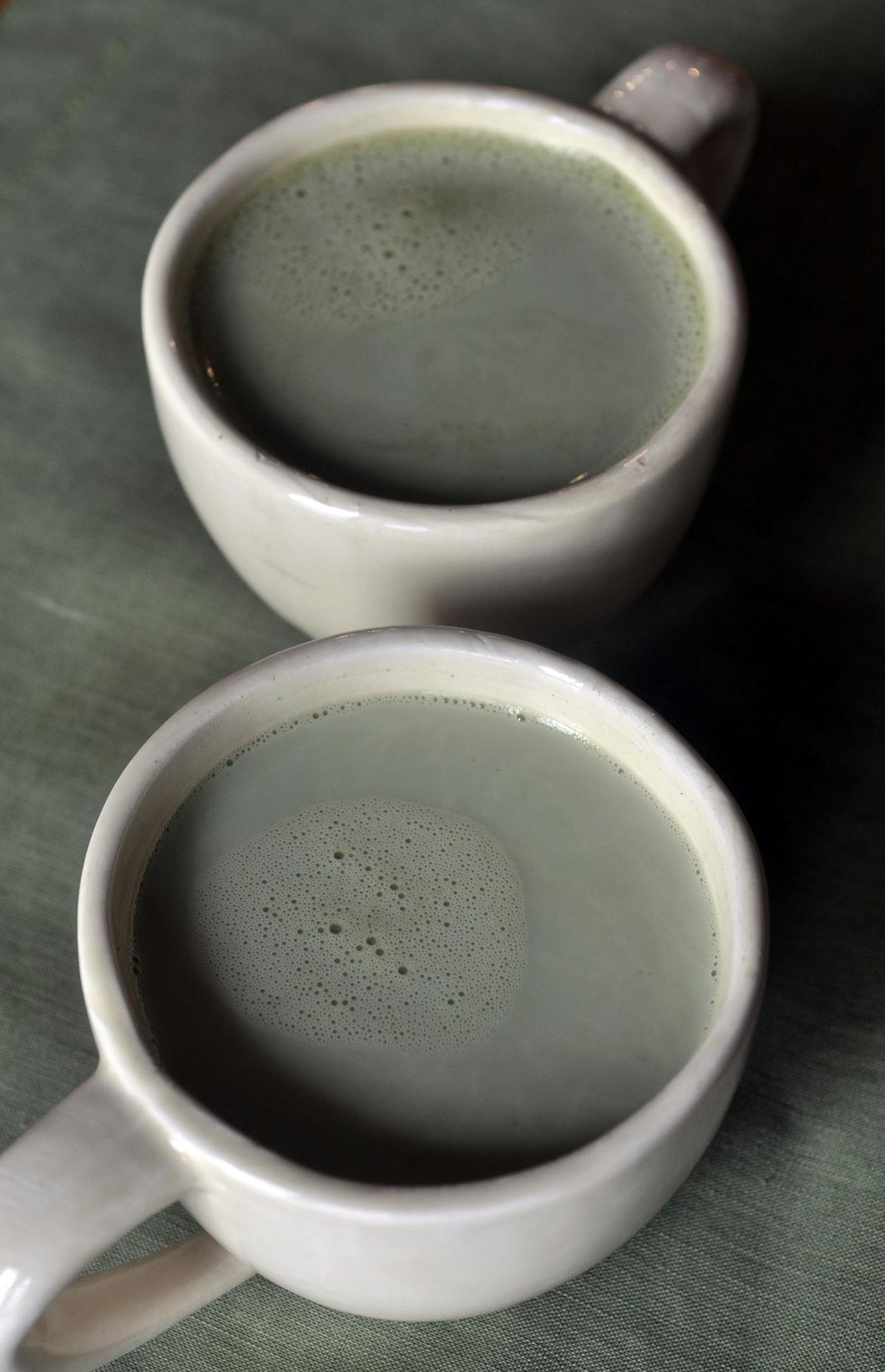
It was love at first latte.
One sip, and I was hooked – by the delicate flavor (gently sweet, grassy) and texture (thin but silky). Of course, there was the color (lush, vibrant, verdant), too.
When I finally met matcha, I was struck with how it was somehow both bright and calming. But I didn’t anticipate the mild obsession that was to come.
It started simply, by sampling the frothy jade mixture at a small tea shop. Then, I wanted to make my own at home and went searching for the super-fine, powdered green tea in local grocery stores.
I had better luck online. Most local grocers don’t carry pure matcha powder. Often, I would be led to an aisle with an instant, sugary mix featuring creaming powder – not the pure form.
My first container of matcha – 5.5 ounces for $20 – didn’t last long and mostly served as a relaxing, end-of-the-day, wind-down drink. Tea time was something to be savored before bedtime. I came to consider it my own personal tea ceremony – with less procedure, but still plenty of surrendering to the here and now – as well as the pleasure of the drink itself.
The second tub – 16 ounces for $35 – lasted longer and, because I had so much more of the stuff, allowed me to start experimenting. In addition to those leafy-green lattes, I started tucking a teaspoon or two of the finely milled tea into all kinds of things – from salad dressings to ice cream and coconut-matcha pots de crème. I began thinking of it as a ground herb or spice, adding dimension to dishes.
I also began thinking, “Matcha! Matcha! Matcha!” – along the lines of “Marcia! Marcia! Marcia!”
Tea time
Next to water, tea is the most widely consumed beverage in the world. And, it can be found, according to the Tea Association of the USA, in nearly 80 percent of U.S. households. Last year, Americans consumed more than 80 billion servings. And in the past five years, sales of hot tea have steadily grown more than 15 percent.
Young people are most likely to be seen sipping it. About 87 percent of millenials drink tea, according to the tea association. Black tea is most popular, accounting for 85 percent of all tea consumed. Green tea ranked second, making up 14 percent.
The U.S. is the third largest importer of tea, following Russia and Pakistan. And the tea association anticipates a continued upswing, with a compound annual growth rate of 5 or 6 percent expected in the upcoming years.
That prediction stems from increased interest in high-end specialty teas, including matcha.
Seeing green
If you haven’t been drinking – and cooking or baking with – matcha, you’ve been missing out. Once you start, the powdered tea will have you seeing green.
Rich in antioxidants, matcha can be enjoyed as a hot or iced beverage, infused into simple syrup to add depth to cocktails, and dusted over dishes both savory and sweet – from Asian noodles to oatmeal. The vegetal taste, naturally sweet with an underlying hint of subtle earthy bitterness, works well with a wide range of flavors – including almond, citrus, mint and macadamia nut. Matcha pairs particularly well with chocolate and almost anything rich and creamy: coconut cream, whipping cream, mascarpone, ricotta, cheesecake, custard, white chocolate, fudge, mousse, and buttercream frosting.
The possibilities seem endless: matcha-scented madeleines, muffins, shortbread, smoothies, pizzelles, pancakes, chia seed pudding, waffles, crepes, cakes and cupcakes, crème brulee, doughnuts, biscotti, French macarons, raw desserts, energy balls.
I’m definitely not done experimenting with matcha, including trying different brands, amounts and grades: ceremonial and culinary. Use too much of some kinds, and the talc-like powder can taste a bit bitter and chalky.
More than
a thousand years
in the making
The practice of milling leaves into powder is believed to have originated in China during the Tang Dynasty, sometime in the 7th to the 10th centuries. During the 12th century, the preparation of whisking powdered high-quality tea with hot water was introduced in Japan, where it was used in rituals in Buddhist monasteries and embraced as a status symbol among nobility and the warrior class.
Today, the best matcha is shade-grown in Japan, where it remains at the heart of the traditional Japanese tea ceremony known as the Way of Tea.
To make your own at home, sift the powder to rid it from clumps, then whisk it with a little hot water. Add steamed milk – rice, almond, soy, cashew, coconut, cow’s – to make it a latte and maybe a little simple syrup, honey or agave to sweeten it up. Or, simply add more hot water.
Remember, it isn’t steeped; matcha is a suspension. Let it sit too long and it will separate.
Matcha Green Tea Latte
From www.bonappetit.com
3/4 cup unsweetened almond, soy, rice, cashew, coconut or cow’s milk
1 teaspoon matcha powder
Agave syrup
Bring 3/4 cup unsweetened almond milk, soy milk, rice milk, or cow’s milk to a bare simmer in a small pot over medium-high heat.
Place 1 teaspoon matcha powder in a heatproof cup. Slowly whisk in 1/4 cup boiling water, then almond or other milk, tipping cup slightly to help create more foam. Sweeten with agave syrup. (Honey or simple syrup would work, too)
Yield: 1 serving
Matcha Cucumber Lemonade
From dailyburn.com
2 Persian cucumbers, chopped
1 cup mint leaves
2 cups cold water
3/4 cup fresh lemon juice
1/4 cup blue agave nectar
2 tablespoons matcha green tea powder
1 cup ice (plus more for serving)
In a blender, puree the cucumbers and mint leaves until just chunky.
In a large pitcher, combine the water, lemon juice, agave and matcha powder. Add the lemon mixture to the puree and blend until very smooth. Return to the pitcher.
Serve in ice-filled glasses with mint and cucumber garnishes.
Yield: 4 servings
Matcha Green Tea and Pistachio-Crusted Halibut
From www.bonappetit.com
1/2 cup raw, unsalted pistachios
1 1/2 teaspoons matcha powder
1/2 teaspoon sugar
2 tablespoons dry breadcrumbs
1 tablespoon unsalted butter, melted, plus more for parchment paper
1/2 teaspoon finely grated lemon zest
Kosher salt, freshly ground pepper
4 (5-ounce) skinless Pacific halibut fillets or other firm-fleshed white fish
Preheat oven to 400 degrees. Place pistachios on a small rimmed baking sheet; toast until browned in spots, about 3 minutes. Let cool.
Grind pistachios, matcha, and sugar in a food processor until nuts are coarsely chopped, about 15 seconds. Add breadcrumbs, melted butter, and lemon zest; process until combined (but not a paste), about 10 seconds. Season topping to taste with salt and pepper.
Line a baking sheet with parchment paper; grease paper with butter. Lightly season fish all over with salt and pepper. Pat 1/4 of nut mixture evenly on top of each fillet. Place fillets on prepared sheet. Bake until just opaque in center, 8-10 minutes.
Servings: 4
Matcha Green Tea Ice Cream
This eggless ice cream is easy to make and uses few ingredients.
2 cups half-and-half, or 1 cup whole milk plus 1 cup heavy whipping cream
3 tablespoons matcha
1/2 cup sugar
Pinch of salt (about 1/16 teaspoon)
In a medium saucepan, whisk together the half and half, sugar and salt.
Start cooking the mixture over medium heat, and add green tea powder. Stir often and cook until the mixture starts to foam and is very hot to the touch but not boiling.
Remove from the heat and transfer the mixture to a bowl sitting in an ice bath. When the mixture is cool, cover with plastic wrap and chill in the refrigerator for 2-3 hours.
Once the mixture is thoroughly chilled, transfer to a pre-chilled ice cream maker and churn according to the manufacture’s instructions (about 20 minutes). Transfer the soft ice cream into an airtight container and freeze for at least 3 hours before serving.
Yield: 1 quart
Notes: Three tablespoons made this ice cream a little bitter, which – according to the allthingssimpleblog.com, which also shared this recipe – “comes closest to the stuff we ate in Japan.” Still, next time, I might use 2 or 2 ½ tablespoons of the powdered green tea and possibly add a little vanilla, too. The original recipe is credited to the Sweets by Sillianah blog, which I was unable to access.
Matcha Green Tea Shortbread Cookies
From foodchannel.com
1 1/2 tablespoons matcha green tea powder
1/2 pound (2 sticks) unsalted butter, softened to room temperature
3/4 cup white sugar
1 teaspoon vanilla extract
2 1/2 cups all-purpose flour, sifted
1/4 teaspoon kosher salt
Turbinado sugar for sprinkling
In the bowl of a stand mixer fitted with paddle attachment; cream the butter on medium-high speed for 3 minutes, or until fluffy. Add the green tea powder and beat until completely blended and color is even.
Slowly add the sugar and vanilla; beat on medium-high until light and fluffy, scraping down sides of bowl with a spatula, as needed.
Slowly add flour and salt and blend on low until just mixed and dough sticks together when squeezed with fingers. Form mixture into a dough ball.
Lightly flour a sheet of parchment paper and place on a baking sheet. Place dough ball on parchment and roll out to 1/4-inch thickness. Chill in the refrigerator for 30 minutes, or until firm.
Using a 2 1/2-inch fluted cookie cutter, cut cookies and place on a parchment lined baking sheet; sprinkle cookies evenly with turbinado sugar. Return to refrigerator and chill for 30 minutes.
Bake in a preheated oven at 325 degrees for 17 to 20 minutes or until light golden brown. Transfer to a wire rack and cool.
Yield: 16
Matcha Cake with Matcha Buttercream
From foodandwine.com
Instead of one big cake, the recipe can also be made into about 20 cupcakes.
For the cake:
1 3/4 cups sugar
2 1/2 cups all-purpose flour
2 tablespoons matcha powder
1 1/2 teaspoons baking powder
1 1/2 teaspoons baking soda
1 1/2 teaspoons kosher salt
2 large eggs
1 cup buttermilk
1 tablespoon vanilla extract
1/2 cup canola oil
3/4 cup boiling water
For the buttercream:
2 cups unsalted butter, softened
4 2/3 cups powdered sugar
2 1/2 teaspoons matcha powder
1 teaspoon vanilla extract
Pinch kosher salt
Preheat the oven to 350 degree. Grease two 8-inch baking pans and line them with parchment paper, or line muffin pans with paper liners. In a large bowl, whisk together all of the dry ingredients. In a small bowl, whisk together the eggs, buttermilk, vanilla extract, and oil. Add the wet ingredients to the dry ingredients and whisk until combined. Whisk in the boiling water.
Pour the batter into the pans and bake until a toothpick inserted into the center comes out clean, about 18 minutes for cupcakes and about 30 minutes for cakes. Transfer the cakes to a cooling rack and let them cool completely.
To make the frosting, beat together all ingredients until smooth. Frost the cakes as desired and serve.