

Arrow-right Camera
The Spokesman-Review Newspaper
Spokane, Washington  Est. May 19, 1883
Jesse Tinsley

Jesse Tinsley

Current Position: photojournalist

Jesse Tinsley joined The Spokesman-Review in 1989. He currently is a photojournalist in the Photo Department covering daily news and shoots drone photography.

Highlights

  • Keeping memories alive: Greg Jensen stands and salutes as taps is played Monday during military honors offered at the chapel nearby at the Washington State Veterans Cemetery in Medical Lake. Jensen, a Vietnam-era veteran of the Air Force, goes to the cemetery almost every day with his lawn chair and a Bible to visit the grave of his wife of 42 years, Estrella. “It’s been 16 months and I miss her every day,” he said. Indoors, a handful of veterans and a few family members read the names of veterans who died without a military funeral, said prayers and folded a flag, followed by a gun salute and taps.

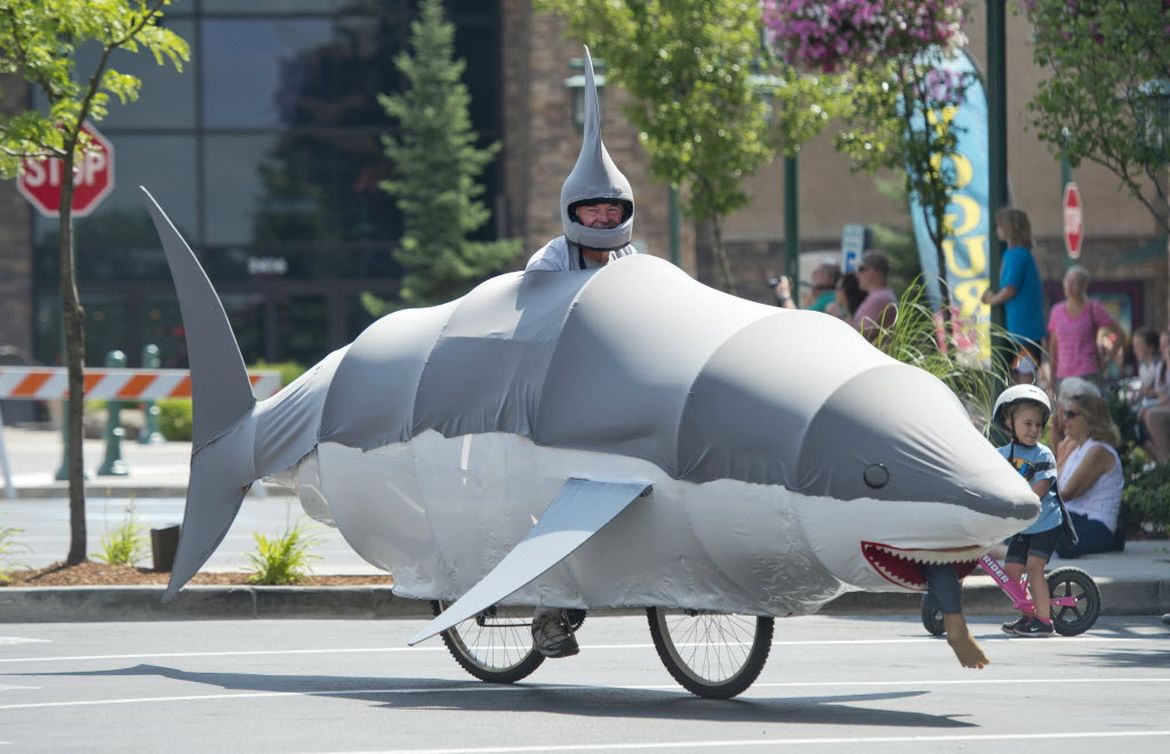
  • Ross Welburn of Hayden rides his shark cycle in the parade at Kinetic Fest, a daylong celebration of moving sculpture and human-powered transportation Saturday at the Riverstone development in Coeur d'Alene Sunday, July 12. Welburn created the frame from wood and plastic pipe and covered it with plastic.

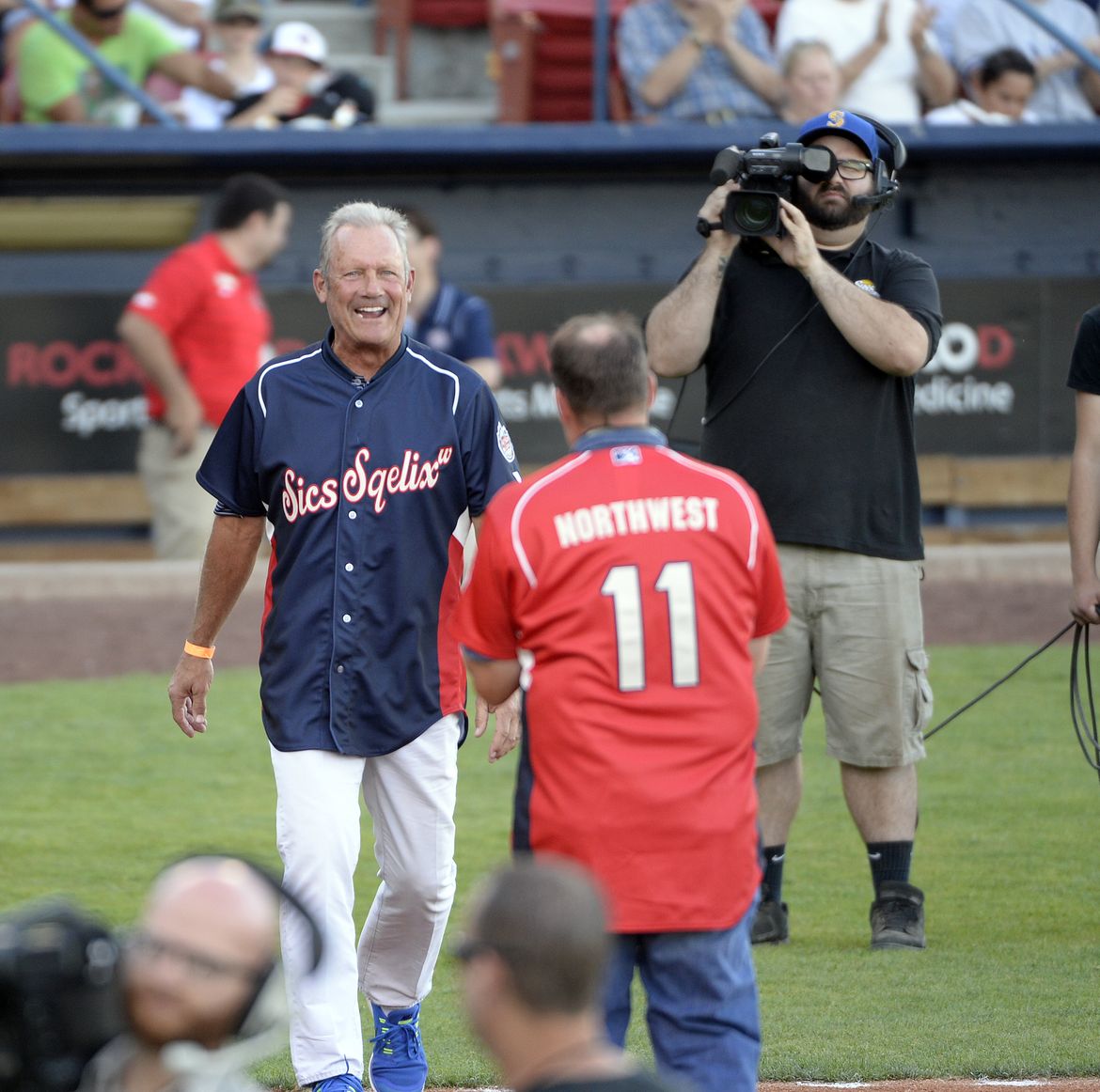
  • Baseball great George Brett meets with Mike Redmon before the Northwest League-Pioneer League All-Star Game.

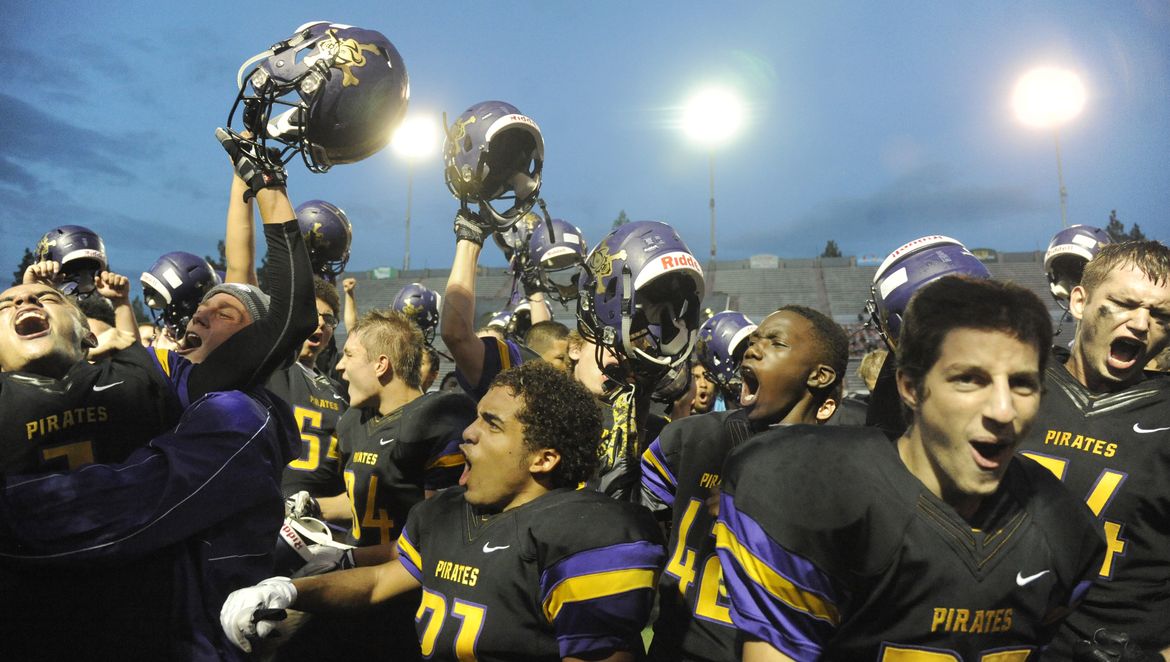
  • Rogers players celebrate after beating West Valley. The Pirates have two victories – back to back – for the first time since 2011.

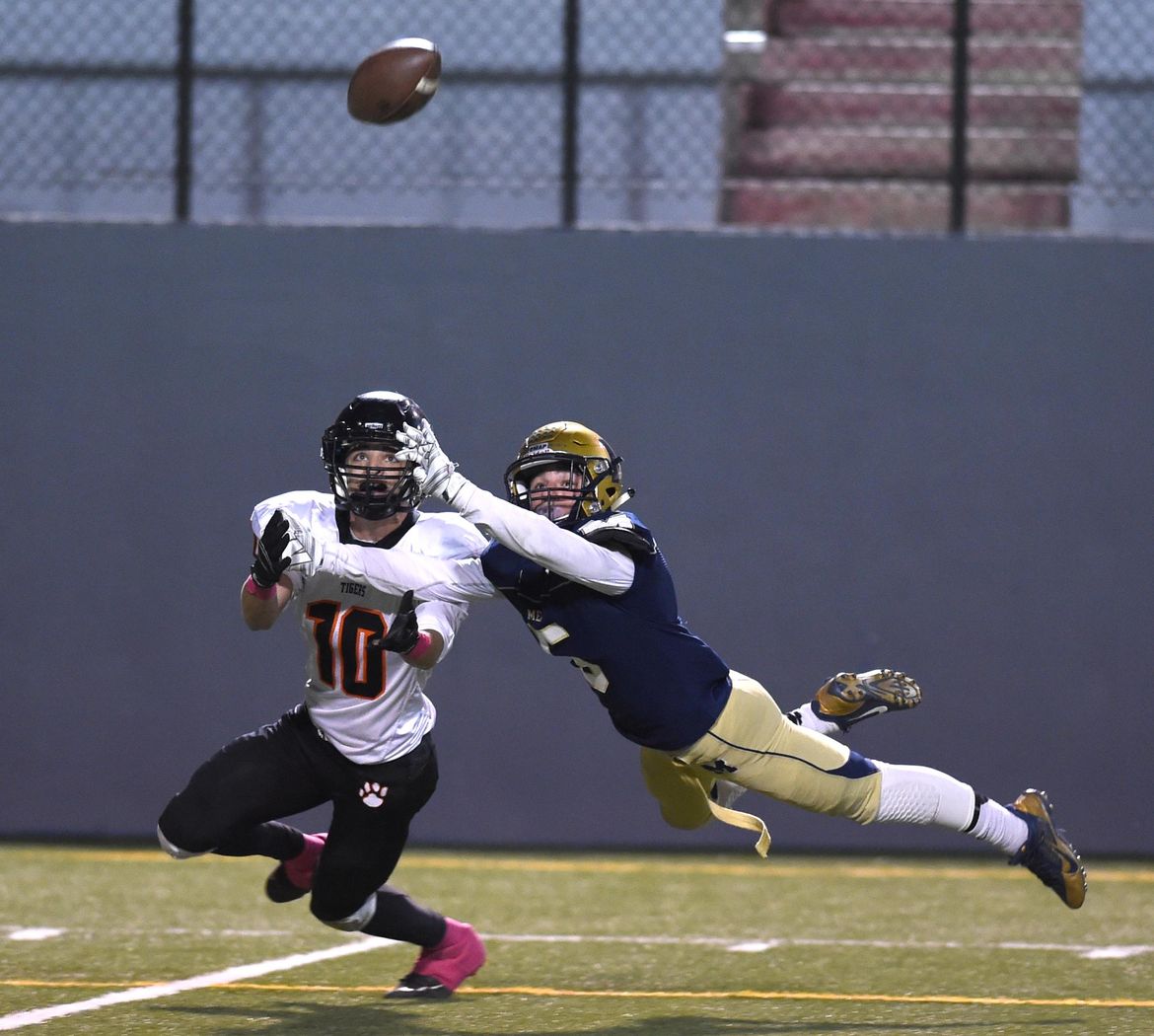
  • Lewis and Clark receiver Leo Haghighi, left, hovers over the goal line and makes a diving touchdown catch past the outstretched arms of Mead's Beau Skinner, right, the LC's first score of the game in the first half, Friday, Oct. 30, 2015, at Joe Albi Stadium.

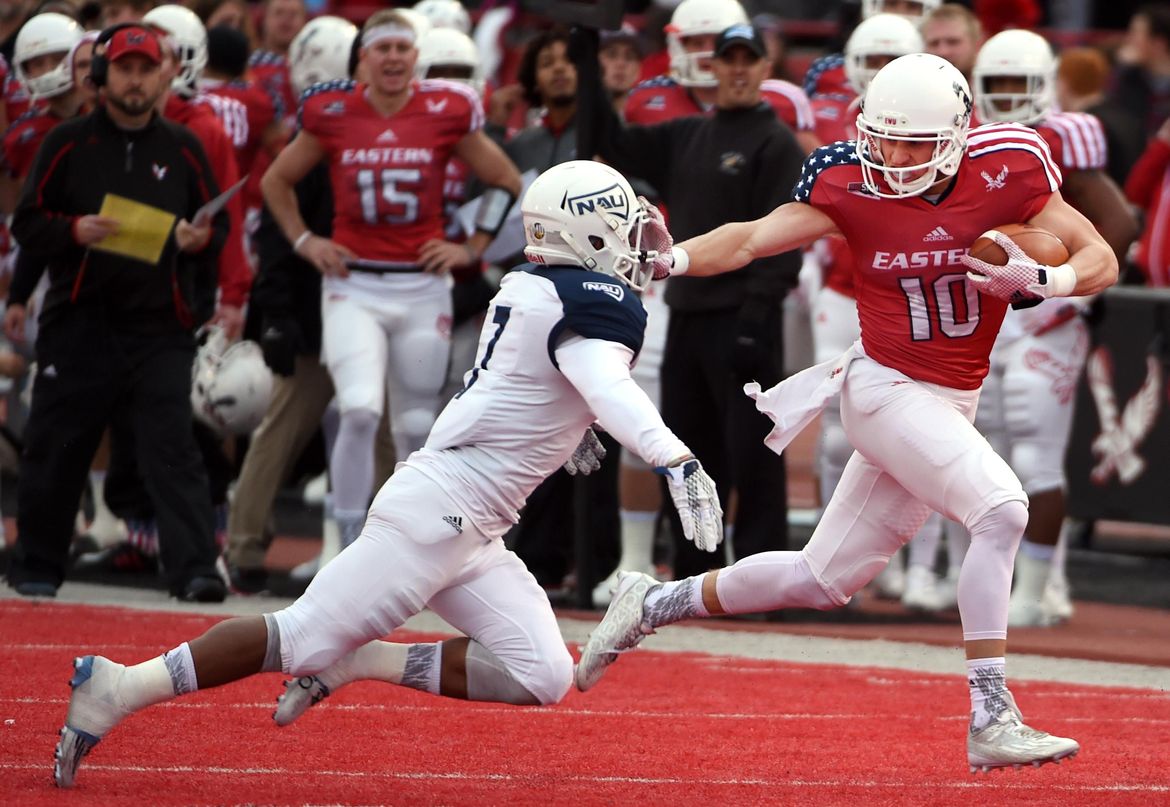
  • Eastern Washington standout receiver Cooper Kupp scampers for a few more yards while straight-arming Northern Arizona’s Eddie Horn (7) in the first half Saturday, Nov. 7, 2015 at EWU’s Roos Field.

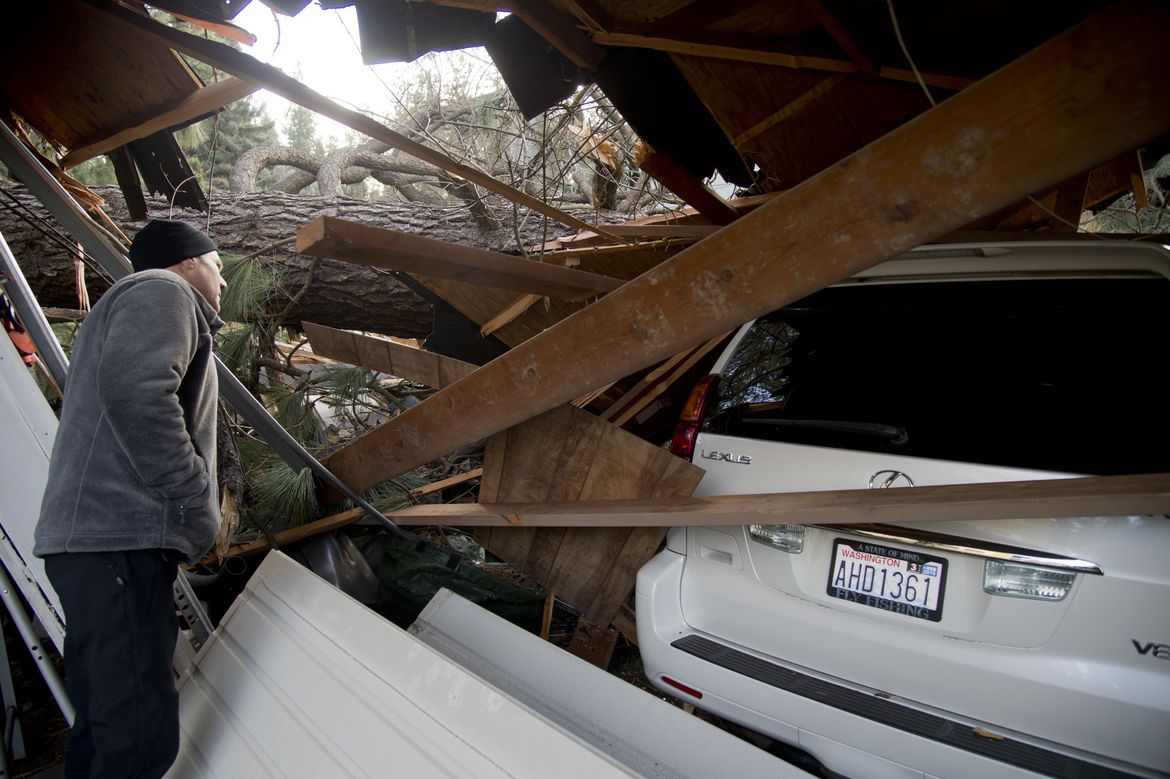
  • Matt Van Vleet, who lives on 18th Ave., east of Bernard, surveys the damage to his garage and two cars from a neighbor's tree, Wednesday, Nov. 18, 2015. Another car now shown, a Subaru, was purchased only a week ago.

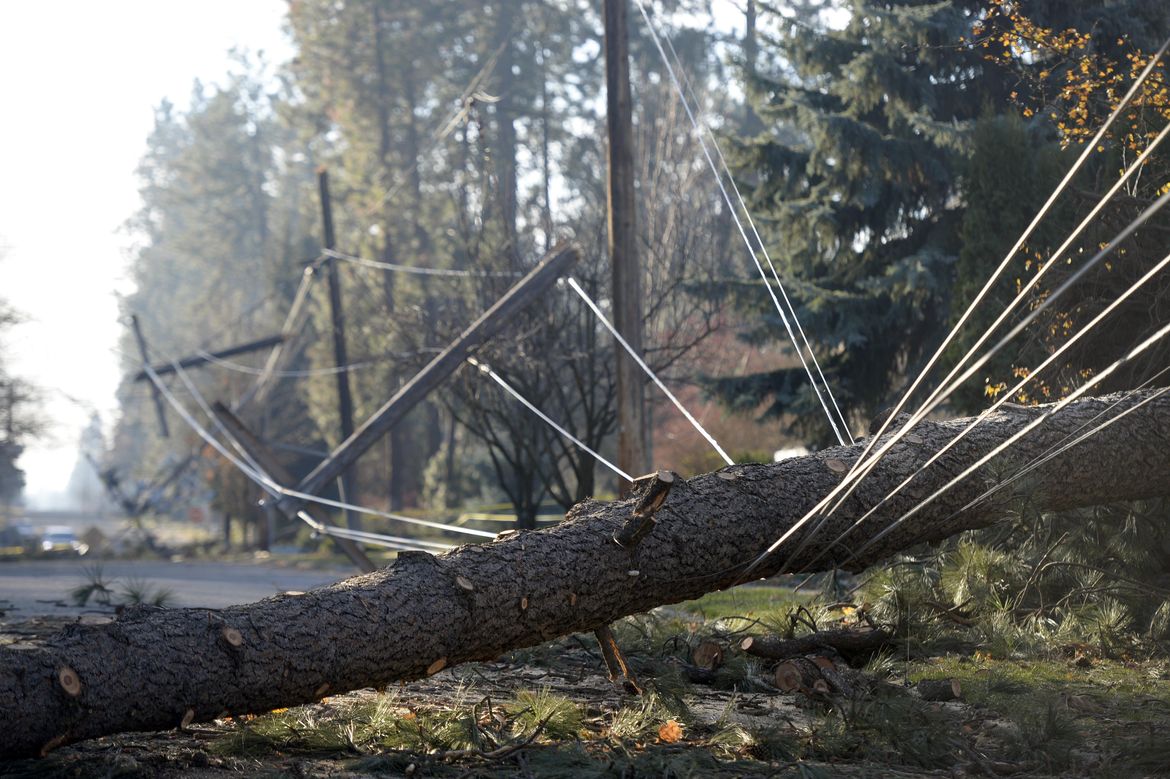
  • South Arthur Street between 27th and 28th avenues remained blocked Saturday by fallen power poles, lines and trees.

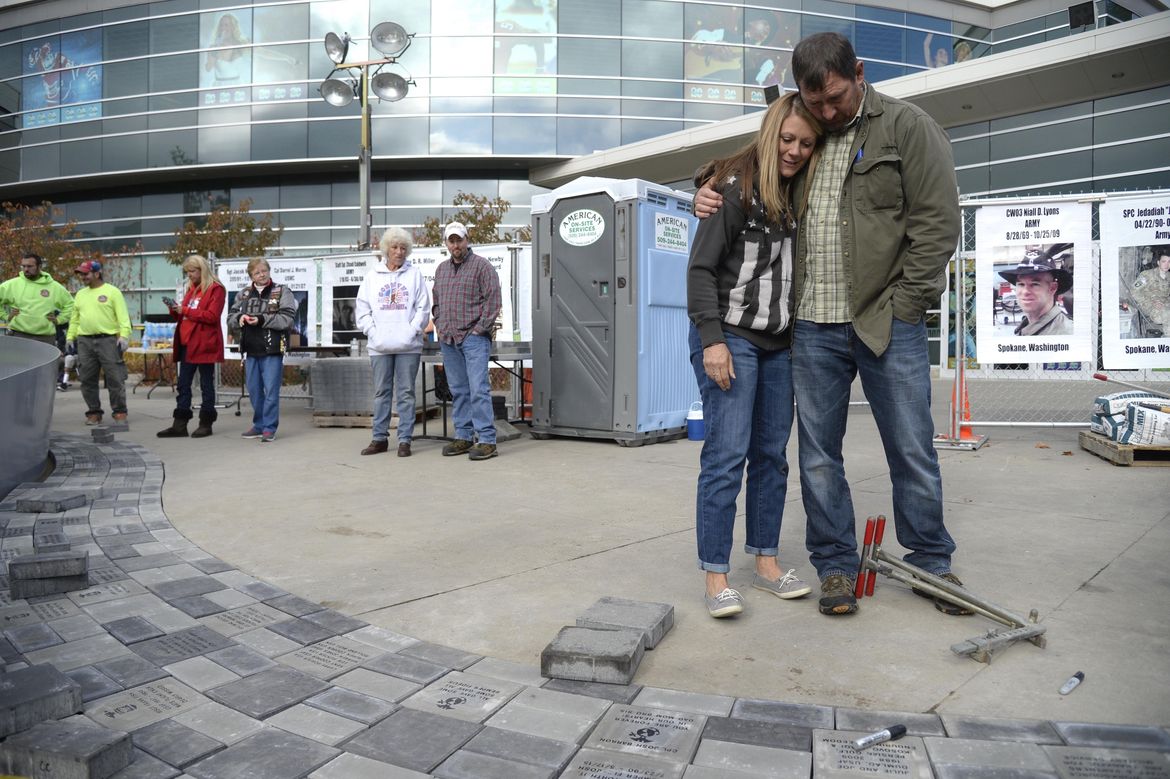
  • Michele and John Barron stand quietly after laying a paving stone inscribed with their son's name in the walkway surrounding the new memorialoutside the Spokane Veterans Memorial Arena on Tuesday, Oct. 27, 2015. Josh Barron, a U.S. Marine, was killed in the crash of a V-22 Osprey aircraft in Hawaii in May 2015.

All Stories

News >  Spokane

Then and Now: Falls City Building

Businessman W.G. Willis bought the southwest corner of Post Street and Riverside Avenue from pioneer land developers A.M. Cannon and J.J. Browne in 1886. He began building the three-story Falls City Building.
News >  Spokane

Then and Now: Washington Street Bridge

Early bridges across the various channels of the Spokane River were made of wood, then steel and, eventually, concrete or stone. And when the Great Northern Railroad depot opened on Havermale Island in 1902, with its iconic Clocktower, access from downtown was only via the Howard Street bridge. So a new steel-supported bridge was hastily built, aligned with Washington Street, that dead-ended at the depot to get passengers to the trains.
News >  Spokane

Then and Now: The National Hotel

In the early 1900s, to house the many single men and women flocking to fill many new jobs, dozens of SRO – single residence occupancy – hotels were erected downtown.
News >  Spokane

Then and Now: J.J. Newberry store

In the late 1800s, America entrepreneurs have created a revolution in retail business by appealing to the thriftiness of the shopper and offering a wide variety of merchandise to save customers time. This was the origin of the dime store.
News >  Spokane

Then and Now: End of the streetcar era

On December 17, 1886, J.J. Browne, Henry C. Marshall and A.J. Ross incorporated the Spokane Street Railway company to build the rails and operate streetcars. The first priority was to connect Browne’s Addition with downtown Spokane.
News >  Spokane

Then and Now: Desert Caravan Inn

The automobile changed the American traveling culture. Stately hotel blocks became less important than the motor inn, motel, or what the Spokesman-Review called “highway hotels.”
News >  Spokane

Then and Now: Baxter General Hospital

As World War II began in earnest, the wounded returning from war overwhelmed the military hospital system and new hospitals were planned. In 1942, city of Spokane donated 160 acres and and the county donated 80 more in northwest Spokane for a hospital.
News >  Spokane

Then and Now: McGoldrick Lumber

James P. McGoldrick, born in 1859, started in the timber business in Minnesota. Seeing that most of the lumber he sold came from the Northwest, he moved to Spokane in 1906 and bought a mill south of Gonzaga College, east of downtown Spokane.
News >  Spokane

Then and Now: Spokane’s Tallest Buildings

Since James Glover rode up to the Spokane Falls in 1873 and made a deal to buy out the two squatters on the land around the falls, there has been an informal competition to build bigger, taller, and more impressive structures than had existed before.
News >  Spokane

Then and Now: Agnes McDonald and the electric car

Agnes McDonald (1865-1961) was one of Spokane’s most colorful characters. She was only 35 when her husband, a wealthy mining investor, died, leaving her with two sons to raise. His investments left her comfortably well off.
News >  Spokane

Then and Now: Washington Water Power building

In the bustling post-war era, Spokane produced a cadre of elite young architects who challenged and pushed each other with every project. That competition produced many notable features in the city, including the 1959 Washington Water Power building.
News >  Spokane

Then and Now: Union Station

Bob Strahorn planned the downtown Spokane Union Station, opened in 1914, to compete with the Great Northern depot, built in 1902.
News >  Spokane

Then and Now: Volunteers of America

Around 1899, a VOA chapter started in Spokane, organizing their charitable activities where they could find space. The group offered religious services along with food and shelter.
News >  Spokane

Then and Now: Comstock Park

James M. Comstock, born in 1838 in Wisconsin, arrived in Spokane in time to witness the great fire of 1889 and start Spokane Dry Goods with Robert Paterson. It became the Crescent, Spokane’s premier department store for a century. He also worked in real estate and owned other businesses. He served a term as Spokane mayor, starting in 1899. James Comstock died in 1918.
News >  Spokane

Then and Now: Temple Court building

Brothers Albert P. and William M. Wolverton, ages 25 and 31, arrived in the frontier town of Spokane Falls in 1880 and paid $350 for a lot on the northeast corner of Riverside Avenue and Wall Street. There they completed the two-story, later three-story, Wolverton block, which holds the distinction as the first brick building in Spokane, in 1881. They started a hardware store together.
News >  Spokane

Then and Now: The steel Monroe Street Bridge, 1892-1909

The first Monroe Street bridge, built by Spokane Cable Railway and partners, cost $42,000 and opened in 1889. Two other iterations followed, the last being the concrete bridge we see today, with four small pavilions designed by Kirtland Cutter.
News >  Spokane

Then and Now: Cannon Mansion

Anthony McCue Cannon, born in 1837 in Illinois, was a restless young man in search of business ideas. He made and lost fortunes in Kansas City, Los Angeles, and Portland, where he had married and divorced.
News >  Spokane

Then and Now: Pennington Hotel

Mission revival was based on the Franciscan missions built throughout California in the late 18th and early 19th centuries and was all the rage from the 1890s to 1915.
News >  Spokane

Then and Now: Victory Heights

In 1943, the military began building dozens of barracks-style four-unit buildings, stretching from the Garden Springs neighborhood eastward to Hangman Creek. The development was called Victory Heights.
News >  Spokane

Then and Now: The Brownstone Building

Built in 1910, the Brownstone Apartments was an elegant, three-story building. At that time, Spokane was booming and workers needed housing. Third Avenue, still on the outskirts of downtown, was lined with apartments and single-family homes.